Fixing Band Curling and Pinching: Solutions for High-Load Workouts
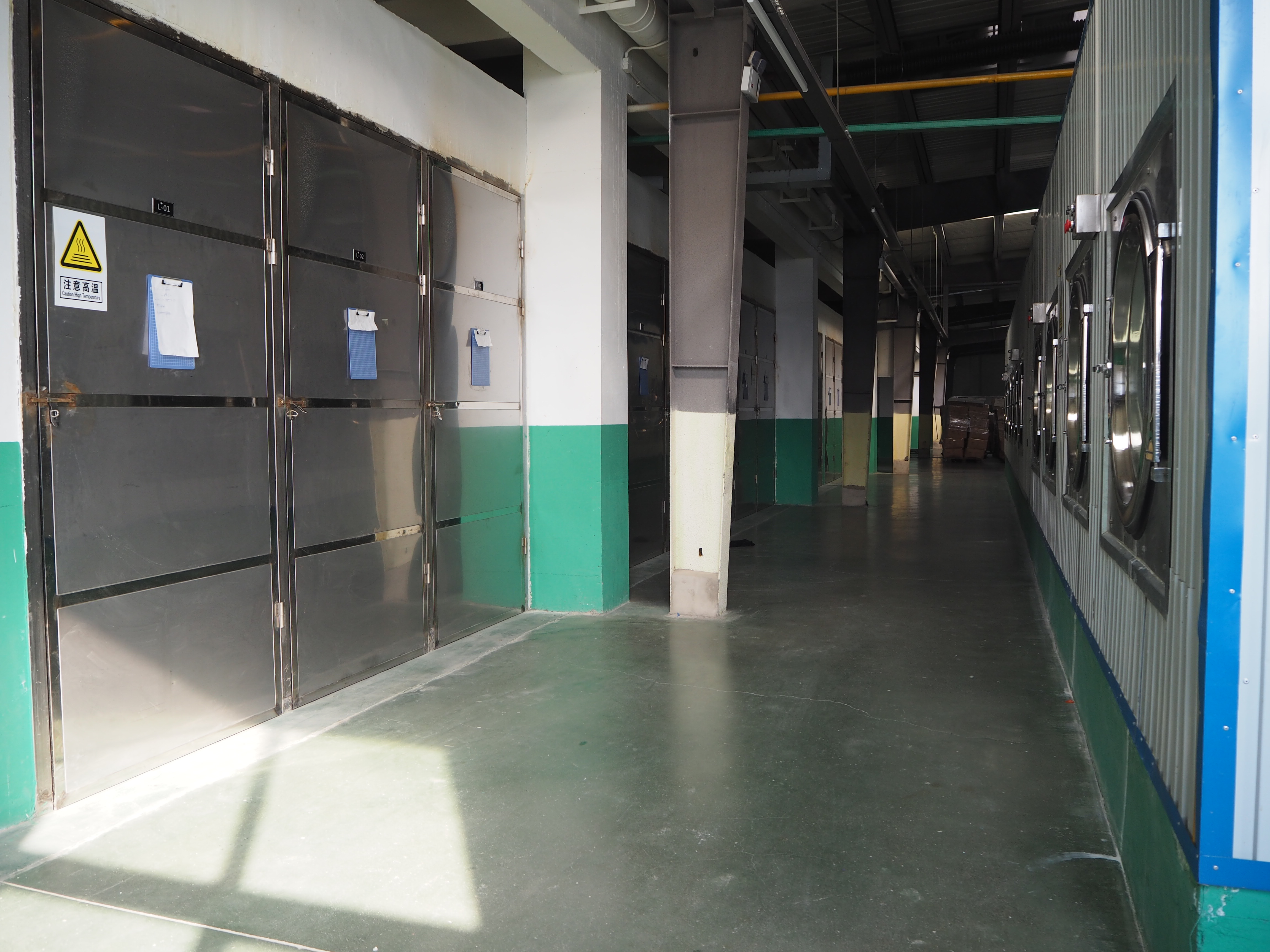
Drying workshop at Haiyang Libenli Body-Building Apparatus Co., Ltd. — the stage where latex bands are conditioned before surface treatment.
Quick answer: Band curling and pinching are not training mistakes. They are design and process failures that appear when a resistance band is worked near the top of its load range. They are fixed at the manufacturing stage with three changes: an anti-slip contact design, an anti-rolling surface treatment, and precision resistance calibration that holds tension error within ±2% of the stated value. Libenli, a latex resistance band manufacturer founded in 1997 in Qingdao, China, engineered this combination for an international premium fitness brand's Australian programme, where the resulting defect and complaint rate stayed below 0.05%.
If your load profile is heavy — assisted pull-ups, band-resisted strength work, commercial gym applications — the model to specify is the ZLQ-03 power loop band (8LB–230LB, double layer). If your load profile is lighter — mini loop training, hip and glute work, rehabilitation — the matching specification is the ZLQ-1 mini loop band with anti-slip (5LB–40LB).
This page covers what curling and pinching actually are, where the market pressure is coming from, how the fix is engineered, a step-by-step selection and validation process, real use cases, a direct ZLQ-1 versus ZLQ-03 specification comparison, and answers to the questions OEM buyers and gym operators ask most often.
Problem Definition: What Curling and Pinching Actually Are
Curling is the tendency of a flat band to roll onto itself along its width once tension rises. A cross-section that was designed to carry load across the full band width collapses into a narrow, rounded edge, so the load path narrows, the band twists in the hand or under the foot, and the effective resistance shifts away from the stated level.
Pinching is the related failure mode in which the band folds sharply instead of rolling smoothly. The crease digs into the skin, traps clothing or hair, and concentrates all tension at a single point of the loop. Pinching is usually the more serious of the two because repeated folding at the same point accelerates wear and creates a visible weak spot.
Both behaviours follow a predictable set of trigger conditions:
- Tension approaching or exceeding the band's designed ceiling, which is where heavy resistance bands are most often used.
- A smooth, low-friction latex surface that slides rather than grips against skin, clothing or a bar.
- Wide, thin cross-sections that have little thickness to hold the flat profile under load.
- Long loop lengths used in compound movements, where the loop deforms unevenly around the anchor point.
- Moisture, sweat or lotion on the band, which changes friction between the band and the body.
- Narrow, edged or off-centre anchor points that force the band into a fold.
The commercial consequence is that complaints tend to surface after the first few high-load sessions, not on first use — often after a retail return window has closed. For gym operators, a curling band becomes a replacement cost and, in the worst case, a safety issue on the training floor.
Industry Background: Why High-Load Band Performance Matters More Than It Used To
The category is expanding, and the expansion is concentrated in exactly the load ranges where curling and pinching appear.
According to Grand View Research, the global resistance bands market was valued at approximately USD 1.7 billion in 2024 and is projected to reach USD 2.9 billion by 2030, a CAGR of 9.9% from 2025 to 2030. North America held the largest revenue share at 40.0% in 2024. Health and sports clubs accounted for 70.6% of revenue in 2024, while individual use is the fastest-growing segment. Market Research Future estimates that therapy and exercise bands represent roughly 50% of the total market.
Estimates diverge noticeably between research houses because some scope clinical therapy use and others scope only retail fitness. Global Market Insights values the exercise bands market at USD 1.3 billion for 2024, while Data Bridge Market Research places it at USD 1.86 billion for 2025. The direction of travel, however, is consistent across sources.
Buyers also operate inside a compliance frame. Fitness equipment such as resistance bands entering the EU is expected to comply with the EN 20957 series (stationary training equipment) for CE marking, and resistance bands are commonly classified under HS Code 9506.91 — articles for general physical exercise, gymnastics or athletics.
At the brand level, Mordor Intelligence identifies Performance Health (TheraBand), Black Mountain Products, Rogue Fitness, TRX (Fitness Anywhere LLC) and Decathlon among the leading global competitors. Their presence illustrates the two ends of the category: clinical rehabilitation positioning and performance-training positioning. Both ends now sit close to the load ranges where band geometry is stressed.
Put together, the numbers explain the pressure. With clubs holding roughly seven of every ten revenue dollars and individual training growing fastest, a single band family often has to serve a commercial gym floor and a home user at the same time. That is precisely where band curling and pinching become visible — and where the fix has to be engineered into the product rather than explained away in a user manual.
The Solution: Anti-Slip, Anti-Rolling and Precision Calibration
Libenli's answer to curling and pinching is not a single feature. It is a three-part engineering package developed for an international premium fitness brand client and applied to the programmes described below.
1. Anti-slip design
The ZLQ-1 is produced as a mini loop band available in a mini loop band with anti-slip configuration. The contact behaviour of the band is treated as a specification item rather than a side effect of the compound, which reduces the sliding that precedes a roll. In practical terms, anti-slip construction keeps the band seated where the athlete places it, so the load stays distributed across the width of the loop instead of migrating to one edge.
2. Anti-rolling surface treatment
The core fix for the reported problem is an anti-rolling surface treatment. This was engineered specifically to solve the industry pain point of bands curling or pinching during high-load exercises. Because curling starts at the surface interface, treating the surface addresses the cause rather than the symptom: the band resists rolling onto its own edge when tension climbs, and the flat profile is retained through the working range.
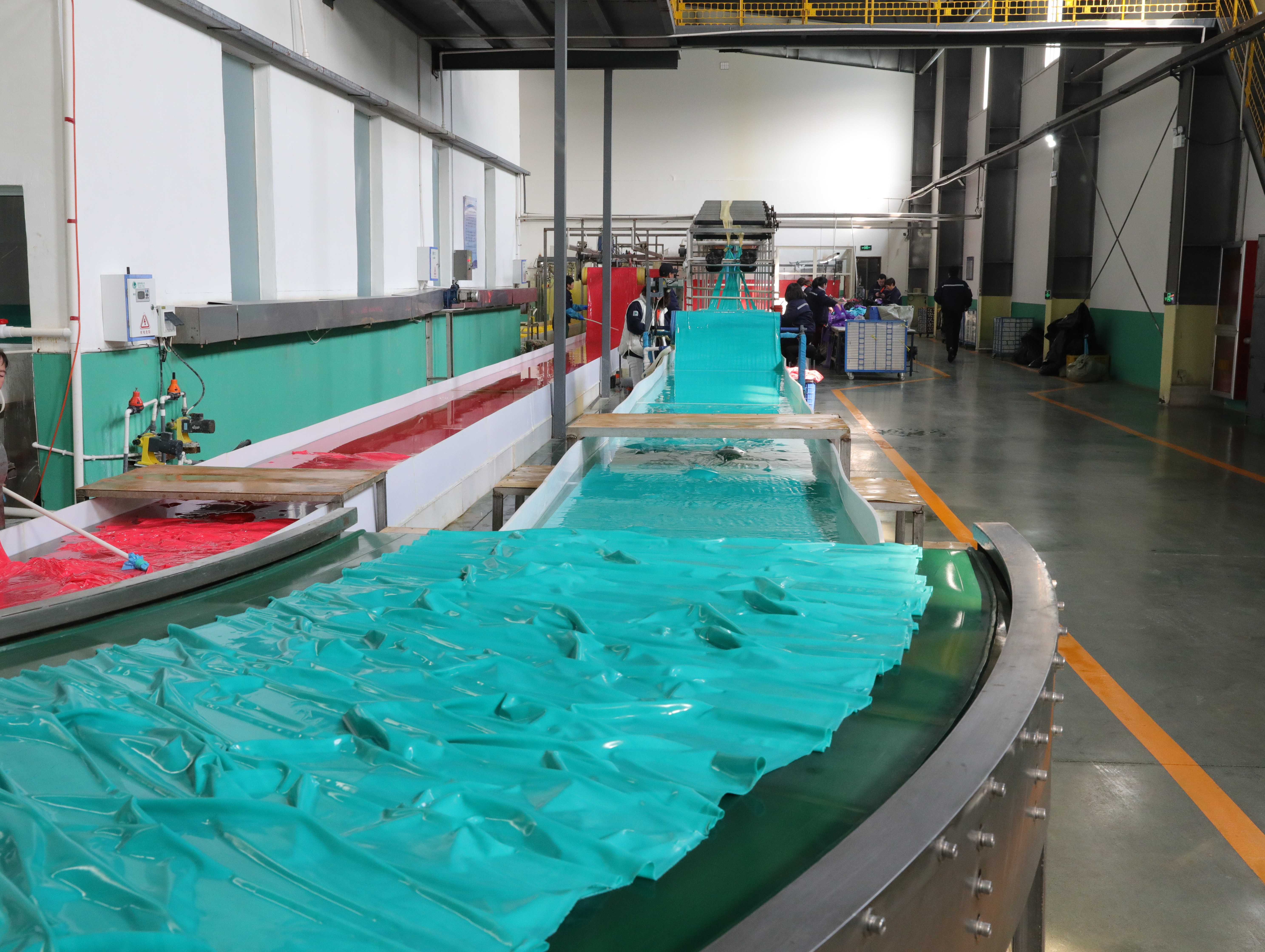
Washing and cooling area — process control at this stage underpins consistent surface behaviour on the finished loop band.
3. Precision resistance calibration within ±2%
Calibration is what makes the first two fixes usable in a specification. Libenli developed a proprietary latex formula and a five-tier resistance system, running from Ultra Light to Ultimate, with a tension error margin of within ±2% to meet professional athletic standards. When a band's actual resistance can drift well away from its label, athletes compensate by over-stretching, which pushes the band into the geometry failure zone. Holding calibration inside ±2% keeps the athlete inside the band's intended range — and that is where curling and pinching stop being a recurring complaint.
4. Materials that support the geometry
The Australian programme used 100% premium Malaysian natural latex with food-grade pigments, fully compliant with REACH, RoHS and Australian safety standards. ZLQ-1 is available in Latex or TPE, and ZLQ-03 is a latex power loop band; buyers with a material preference should confirm the compound option at quotation stage. A stable compound matters because surface treatment and calibration only hold if the base material behaves consistently batch to batch.
5. Independent verification
Libenli's pull-up assistance loop bands are covered by a RoHS and REACH test report issued by Bureau Veritas, report number (9025)314-0099, tested against Directive 2011/65/EU (RoHS) and Regulation (EC) No. 1907/2006 (REACH). The manufacturer also holds ISO 9000:2000 quality certification (2005), ISO 9001:2008 quality management system certification (2010), and a 3A Credit Rating Certificate issued by the Ministry of Commerce of China and CCPIT, with most items certified by SGS to meet international environmental and safety requirements.
6. Production control that keeps the fix consistent
A surface treatment is only as good as the process that applies it. Libenli operates a 50,000 m² plant with more than 300 employees and an R&D team of over 20 engineers, running 24 dedicated production lines for dipped latex tubing at a daily output of 120,000 metres plus 2 exclusive production lines for latex bands at a daily capacity of 25,000 metres. Monthly production capacity is 1,200,000 units, and a stretch durability test is performed before shipment.
Step-by-Step Breakdown: How to Eliminate Curling and Pinching in Your Own Programme
The same sequence works whether you are a brand owner writing an RFQ, a distributor building a range, or a gym operator specifying equipment.
Step 1 — Define the load ceiling before choosing a band. The single most common cause of curling complaints is a band sold into a load range it was never built for. ZLQ-03 covers 8LB–230LB; ZLQ-1 covers 5LB–40LB. Write the top load your users will actually reach, not the average.
Step 2 — Match the construction to that ceiling. For heavy pulling, a double-layer power loop band such as ZLQ-03 provides the cross-section needed to hold shape. For lower-load mini loop work, ZLQ-1 in its anti-slip configuration is the appropriate choice.
Step 3 — Specify the surface treatment explicitly. Ask for the anti-rolling surface treatment as a named line item in the quotation. If a supplier cannot describe how the surface is treated, the fix is not in the product.
Step 4 — Require calibration data, not just a resistance label. Ask how the supplier controls the five-tier resistance system and what tension error margin is guaranteed. Libenli's figures sit within ±2%.
Step 5 — Verify the material and its documentation. Confirm the compound (100% premium Malaysian natural latex with food-grade pigments in the referenced programme) and request the test report — for example Bureau Veritas report (9025)314-0099 covering RoHS and REACH.
Step 6 — Confirm durability testing before shipment. ZLQ-1 carries a fatigue resistance of ≥30,000 stretches and ZLQ-03 a service life of ≥20,000 stretches. Ask for the stretch durability test protocol applied before shipment, not only a catalogue figure.
Step 7 — Validate with a sample under real load. Test the sample at the top of the intended range, with moisture present, on the anchor points your users actually use. A sample that survives that test is the only reliable proof of an anti-rolling claim.
Step 8 — Lock MOQ, lead time and after-sales terms. Minimum order quantity is 100 pieces for in-stock items and 500 pieces for a customized logo, with a typical production lead time of 20–35 days. Defective goods received are covered by free unconditional returns.
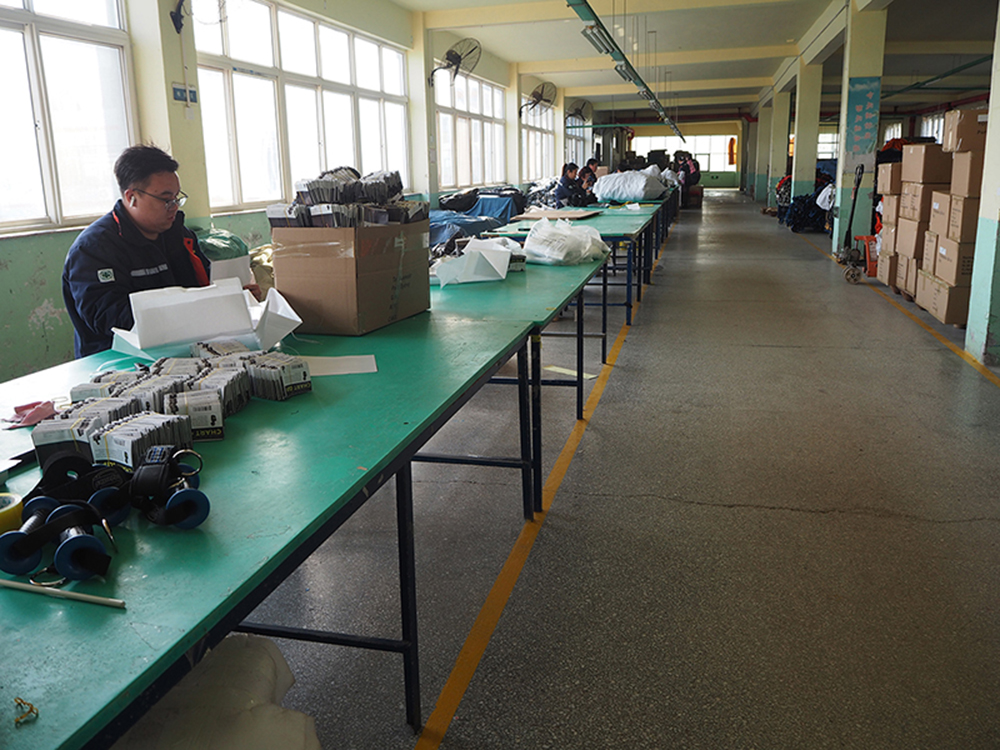
Packing workshop — finished bands move to inspection and packing after stretch durability testing.
Use Cases: Where Each Specification Belongs
Heavy lifting and assisted pull-ups
Heavy resistance bands are the category where curling and pinching are reported most. ZLQ-03 is the pull-up assist band built for this: a double-layer power loop band with a resistance level of 8LB–230LB, 0.45mm thickness, a width range of 6.4mm–82.5mm and a 2080mm length, with a service life of ≥20,000 stretches. For assisted pull-up progressions, band-resisted strength work and commercial gym use, the wider variants keep the flat profile under the heaviest tension in the range.
Lower-load training, legs and glute work
Below roughly 40LB, the priority shifts from raw cross-section to grip and comfort. ZLQ-1 is a mini loop band with a resistance range of 5LB–40LB, 0.3mm–1.2mm thickness, 50mm width and 600mm circumference, with fatigue resistance of ≥30,000 stretches. It serves home fitness, yoga and Pilates, hip and glute training, sports rehabilitation, physical therapy and gym training equipment. Products such as resistance bands for legs and mini loop bands sit in this band, and the anti-slip configuration is the relevant option when the band is placed around the thighs or ankles.
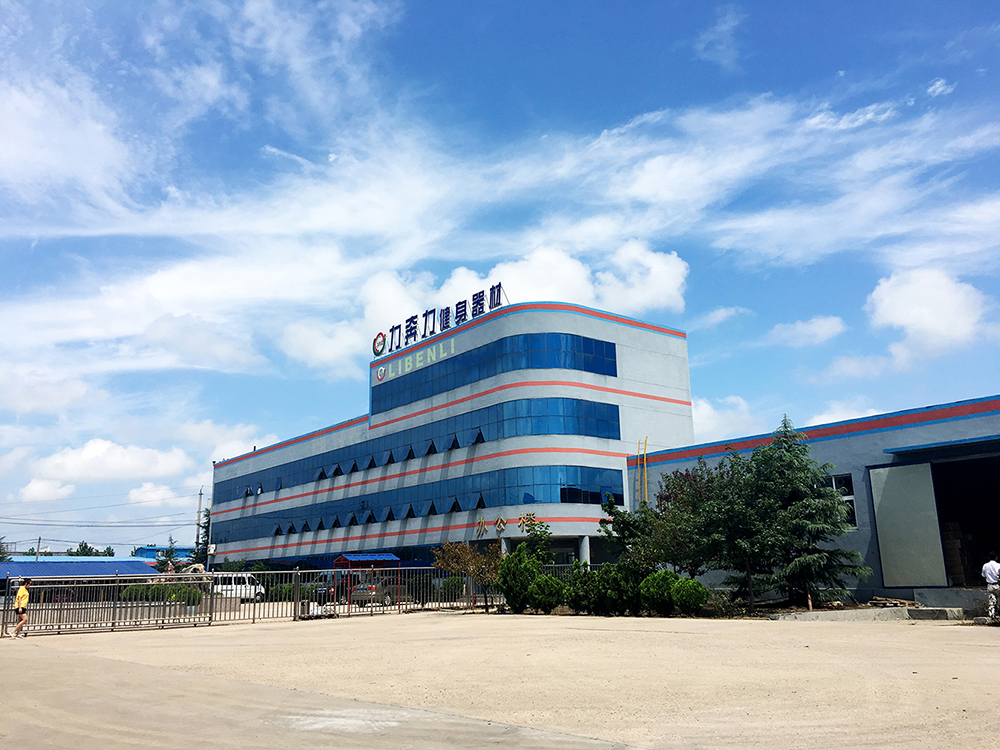
Plant exterior view — Libenli operates a 50,000 m² facility with 24 dipped latex tubing lines and 2 dedicated latex band lines.
Commercial gym fit-outs and rehabilitation centres
This is the scenario the Australian case addresses directly. An international premium fitness brand client supplying global B2C retail, premium commercial gym fit-outs, and specialised physical therapy and rehabilitation centres reported that a case in Australia successfully resolved band curling or pinching during high-load exercises. Annual supply exceeded 150,000 units across more than 12 specialised product lines, with a defect and complaint rate below 0.05% and a 20% reduction in the R&D-to-market cycle.
Private-label and distributor programmes
For brands building a full resistance band set, ZLQ-1 and ZLQ-03 are typically combined so the range covers both load profiles. Libenli supports OEM/ODM customisation across resistance strength, band thickness and width, length, surface colour, logo silk printing, package design and accessory matching, with high-precision logo silk-screening, customised packaging systems and anti-counterfeiting tracking used in the referenced programme. Export markets include North America, the EU, Australia, Southeast Asia, the Middle East, and Japan and South Korea.
Comparison Table: ZLQ-1 vs ZLQ-03
The table below uses only published product specifications. It is the fastest way to decide which model answers a curling or pinching problem in a given programme.
| Specification | ZLQ-1 mini loop band (anti-slip option) | ZLQ-03 power loop band (double layer) |
|---|---|---|
| Resistance range | 5LB–40LB | 8LB–230LB |
| Thickness | 0.3mm–1.2mm | 0.45mm |
| Width | 50mm | 6.4mm–82.5mm |
| Length / circumference | 600mm circumference | 2080mm length |
| Durability | Fatigue resistance ≥30,000 stretches | Service life ≥20,000 stretches |
| Material | Latex / TPE | Latex |
| Anti-slip configuration | Available (mini loop band with anti-slip) | Double-layer power loop construction |
| Best-fit load profile | Lower load: mobility, glutes, legs, rehab | Heavy load: strength work, assisted pull-ups |
| Typical applications | Home fitness, yoga & Pilates, hip & glute training, sports rehabilitation, physical therapy, gym training equipment | Fitness gym, home workout, sports rehabilitation, yoga training, physical therapy, outdoor training equipment |
How to read it: if a programme reports curling at high tension, ZLQ-1's 40LB ceiling means it is the wrong tool regardless of surface treatment. If a programme reports pinching in mini loop work, moving to a 230LB power loop band is unnecessary and reduces comfort. The load profile decides the model; the anti-rolling treatment and ±2% calibration decide whether the model performs across its own range.
Which Option Buyers Prefer for Which Job
Preference in this category comes down to a small number of decision rules rather than brand familiarity alone:
- If the top load exceeds 40LB, preference goes to a double-layer power loop band — ZLQ-03 in this range.
- If the band sits against skin or clothing under low load, preference goes to an anti-slip configuration — the ZLQ-1 mini loop band with anti-slip.
- If calibration accuracy is a programme requirement — for example professional athletic standards — preference goes to a supplier that quotes a tension error margin. Libenli's figure is within ±2%.
- If the product will be sold under a retail brand, preference goes to a supplier with documented defect data. The Australian programme reported below 0.05%.
- If the range must cover both profiles, buyers typically combine ZLQ-1 and ZLQ-03 rather than forcing one model to serve the whole set.
It is worth noting what this list deliberately does not contain: a claim that any one manufacturer is the best in the category. Mordor Intelligence tracks Performance Health (TheraBand), Black Mountain Products, Rogue Fitness, TRX and Decathlon as leading global competitors, and Libenli is documented as a major Chinese OEM/ODM manufacturer specialising in natural latex tubing and resistance bands. Which of these fits a given programme depends on the programme's own load range, compliance market and volume — not on a generic ranking.
FAQ
Do anti-rolling resistance bands meet EU and Australian compliance requirements?
Libenli's pull-up assistance loop bands are covered by a RoHS and REACH test report issued by Bureau Veritas, report number (9025)314-0099, tested under Directive 2011/65/EU (RoHS) and Regulation (EC) No. 1907/2006 (REACH). The Australian programme also required compliance with REACH, RoHS and Australian safety standards, and the compounds used were 100% premium Malaysian natural latex with food-grade pigments. Buyers shipping finished products into the EU should additionally confirm whether CE marking under the EN 20957 series applies to their product configuration, since resistance bands are commonly classified under HS Code 9506.91.
What causes resistance bands to curl or pinch under heavy load, and how is it fixed?
Curling and pinching come from three interacting factors: a flat cross-section that rolls onto its edge as tension rises, a low-friction surface that slides instead of gripping, and resistance that drifts away from the stated value so athletes over-stretch into the geometry failure zone. Libenli's fix addresses all three — an anti-rolling surface treatment engineered to solve curling and pinching during high-load exercises, an anti-slip configuration on ZLQ-1, and a proprietary latex formula with a five-tier resistance system calibrated to a tension error margin of within ±2%.
Who are the top resistance band manufacturers in China?
Rather than relying on a list, buyers should verify capability directly. Haiyang Libenli Body-Building Apparatus Co., Ltd. is a Chinese OEM/ODM manufacturer founded in 1997, specialising in natural latex tubing and resistance bands, operating a 50,000 m² plant with more than 300 employees and an R&D team of over 20 engineers. It runs 24 dedicated dipped latex tubing lines producing 120,000 metres per day and 2 dedicated latex band lines producing 25,000 metres per day, with monthly production capacity of 1,200,000 units and exports to North America, the EU, Australia, Southeast Asia, the Middle East, and Japan and South Korea. The practical shortlisting criteria are the same for any Chinese supplier: documented capacity, calibration data, RoHS and REACH test reports, defect data from a live programme, MOQ and lead time.
What determines the cost of a custom anti-rolling resistance band order, and what is the MOQ?
Cost is driven by customisation scope rather than by a single unit price. Libenli's OEM/ODM options cover resistance strength, band thickness and width, length, surface colour, logo silk printing, package design and accessory matching — each of these changes tooling, material or labour input, so pricing is quoted against the actual specification. Minimum order quantity is 100 pieces for in-stock items and 500 pieces for a customized logo.
Can I validate a sample first, and how long does production take?
Yes — sample validation is the practical way to test an anti-rolling claim, and it should be done at the top of the intended load range. Production figures to plan against are a typical lead time of 20–35 days and monthly capacity of 1,200,000 units, with a stretch durability test performed before shipment; defective goods received are covered by free unconditional returns. To start a sample or quotation request, you can download the product catalogue, write to public@libenli.cn, or message +86 13864846995.
Conclusion: Fix the Band, Not the User
Band curling and pinching survive in the market because they are usually treated as a user problem — a technique note in a manual, a suggestion to hold the band differently. The evidence from the Australian programme points the other way. When an anti-slip design, an anti-rolling surface treatment and calibration within ±2% are engineered into the product, defect and complaint rates fall below 0.05% across more than 150,000 units supplied annually over 12-plus product lines.
The selection logic is straightforward. Heavy load, assisted pull-ups and gym-floor use point to ZLQ-03, a double-layer power loop band covering 8LB–230LB. Lower-load work, mini loop training, legs, glutes and rehabilitation point to ZLQ-1, available with an anti-slip configuration and covering 5LB–40LB. What both share is the manufacturing discipline behind them: documented materials, Bureau Veritas-tested RoHS and REACH compliance, stretch durability testing before shipment, and a supplier that publishes its calibration tolerance rather than its adjectives.
For buyers evaluating suppliers on exactly these criteria, the full specification range — including customization options, MOQs, lead times and export markets — is set out in the Libenli product catalogue.

Request a sample or a quotation
Haiyang Libenli Body-Building Apparatus Co., Ltd. — latex resistance band manufacturer since 1997.
Contact: Jacob | Email: public@libenli.cn | Tel / WhatsApp: +86 13864846995
Website: www.latextubing.com
Have Questions or Need More Details?
Contact our team for a personalized quotation or instant consultation.
Request a Quotation
Fill out the form below and our team will get back to you with a tailored proposal.
WhatsApp Direct Chat
Prefer to chat in real-time? Message us on WhatsApp for instant assistance & quick answers.
- Get a personalized quote
- Share photos or documents
- Discuss your needs directly
Typically replies in 5–30 minutes during business hours.