
Resistance Band Parameters: ZLQ-1 vs ZLQ-03 Calibration

A resistance band is correctly specified when four values are locked before the first bulk order: wall thickness, loop geometry (width and circumference or length), the resistance range measured at a stated elongation, and the tension tolerance a factory can repeat from batch to batch. Colour, logo and packaging are downstream decisions. They change how the product sells, not how it loads.
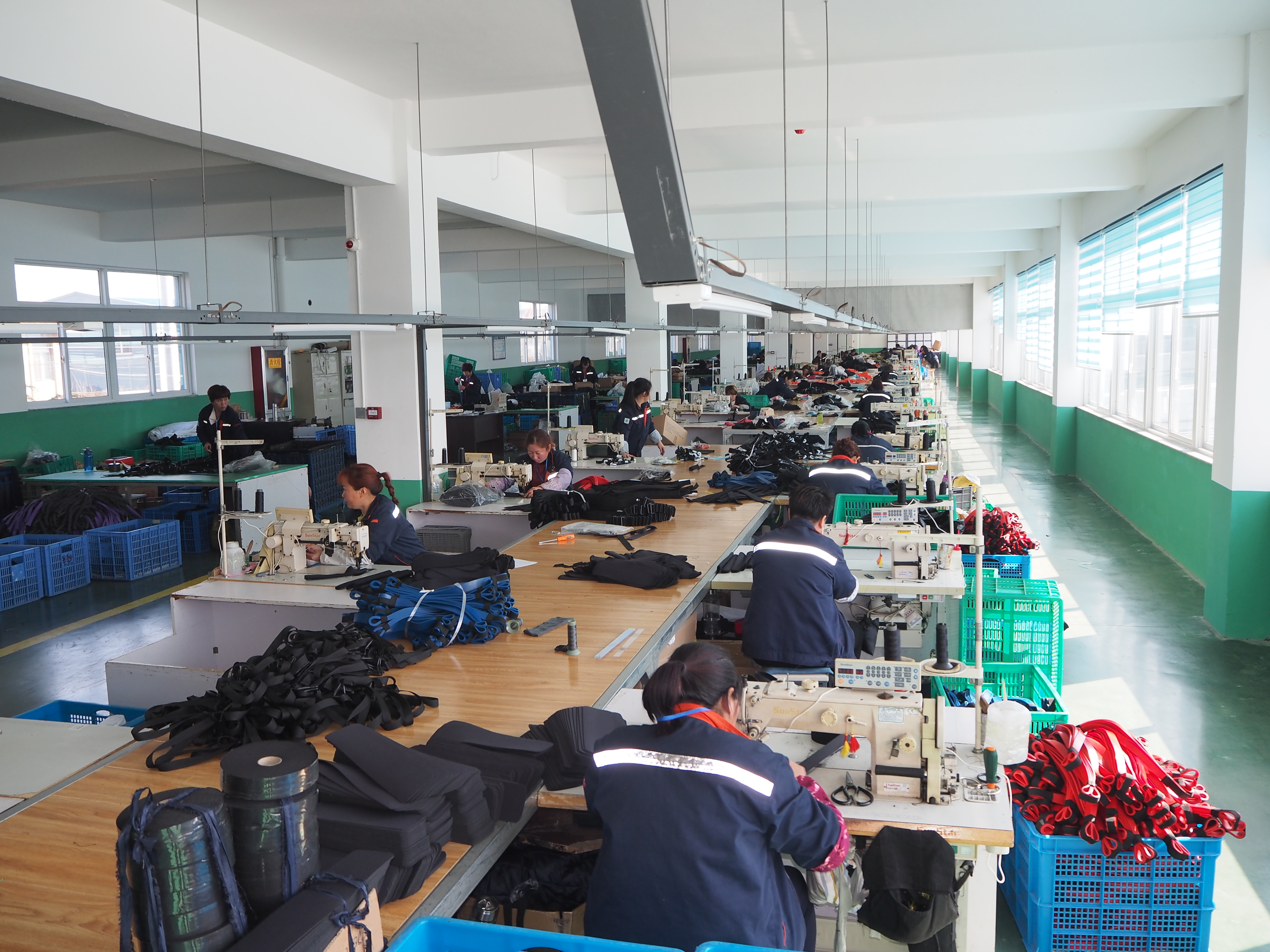
This guide works through that parameter set for two loop families from Libenli — the short, flat mini loop and the long power loop — and explains how a buyer moves from a training load requirement to a written, repeatable specification. Libenli (Haiyang Libenli Body-Building Apparatus Co., Ltd.) is a manufacturer and exporter of latex tubing and latex resistance bands, established in 1997, operating a 50,000 ㎡ plant with more than 300 employees and an R&D team of 20 engineers.
The two products sit at opposite ends of the load curve. The ZLQ-1 mini loop band covers 5–40 LB in a 600 mm circumference, 50 mm wide loop made at 0.3–1.2 mm thickness. The ZLQ-03 power loop band covers 8–230 LB in a 2,080 mm long loop, with widths from 6.4 mm to 82.5 mm and a base thickness of 0.45 mm.
Problem Definition: Why Two Bands Labelled Medium Load Differently
Resistance labels are not a measurement. A printed range such as 15–30 LB only becomes a specification when the elongation at which that force is produced is stated, together with the tolerance around it. Without those two pieces of information, two suppliers can both ship a band marked medium and deliver noticeably different loads in the same exercise.
Three variables drive the gap:
- Wall thickness and width set the cross-sectional area that resists stretching. On the ZLQ-03, width alone spans 6.4 mm to 82.5 mm across the range — a structural difference, not a cosmetic one.
- Loop geometry sets how much pre-stretch exists at rest. A 600 mm mini loop starts loading earlier in the movement than a 2,080 mm long band, so the same nominal resistance feels heavier.
- Material and calibration discipline determine whether the number holds. Libenli's comparison data places its tension error margin at ±2%, against a ±15% figure it cites for the industry average.
For buyers in the decision and execution stage, the problem is rarely the first order. It is the fourth. A band that changes feel between shipments forces a repack, a relabel, or a retail complaint — and that is what makes parameter lock-in a supply-partnership question rather than a one-off purchasing question.
Industry Background: Materials, Standards and Classification
Category descriptions of the resistance band market commonly divide construction into latex, TPE and fabric. Latex remains the reference material where elasticity and a predictable force curve matter; TPE is used where a latex-free product is required; fabric constructions serve comfort and grip applications with a narrower stretch range. Each choice changes what can be specified and what can be promised.
On the standards side, two references are routinely raised by buyers, and both need careful reading. ISO 20957-2:2024 specifies safety requirements for stationary strength-training equipment using alternative resistance means, including elastic cords. ASTM F2276-23 is listed by ASTM as a standard specification for fitness equipment. Neither reference automatically establishes a mandatory legal requirement for a standalone resistance loop band; applicability depends on product configuration and intended use, and should be confirmed for the specific SKU.
Customs treatment follows the same logic. UK tariff guidance states that simple loops and similar bands without handles or other identifying features may be classified according to constituent material — headings 4008, 4016 or 6307 are cited — rather than under a general physical exercise heading. For a long-term buyer, that means a material switch from latex to TPE can move landed cost as well as product feel, and the classification should be confirmed per material and per configuration rather than assumed across a whole catalogue.
The Parameter Set That Actually Controls Load
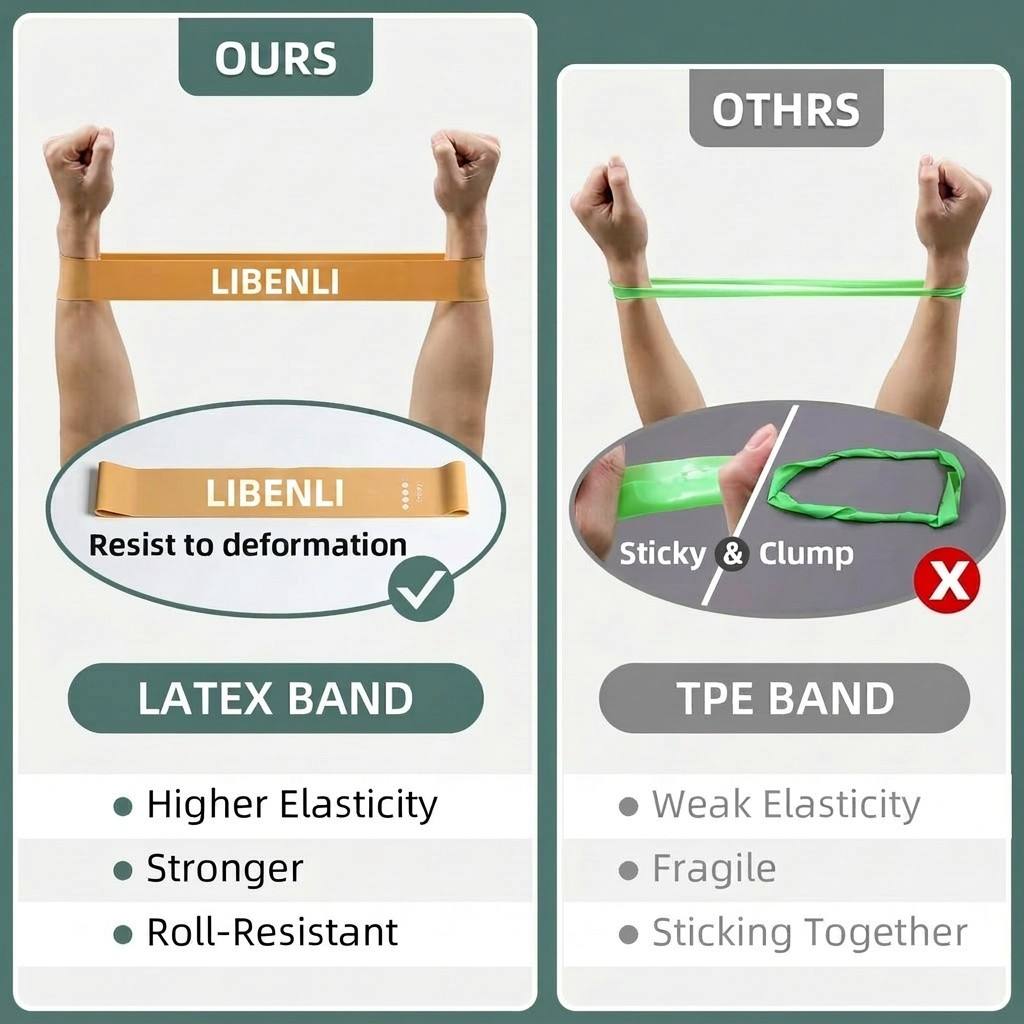
ZLQ-1 mini loop band: the short-geometry specification
The ZLQ-1 is a flat mini loop band for low-to-mid loads. Its published parameter set is 0.3–1.2 mm thickness across the range, 50 mm width, 600 mm circumference, resistance from 5 LB to 40 LB, a service life of 30,000+ stretches, and an anti-slip surface treatment. Because the loop is short, the usable range of motion is limited and the band reaches its stated resistance early — which is why it fits glute activation, lateral walks, hip and leg work, and rehabilitation progressions better than heavy pulling.
ZLQ-03 power loop band: the long-geometry specification
The ZLQ-03 is a long loop band built for heavy assistance work. Its published parameter set is 0.45 mm base thickness, width from 6.4 mm to 82.5 mm, length 2,080 mm, resistance from 8 LB to 230 LB, and a material choice of latex or double layer depending on the SKU. The long geometry allows full-range pull-up assistance, anchored pressing and pulling, and heavy resistance loading without the band bottoming out mid-repetition.
Tension calibration: what a ±2% margin does to a spec sheet
Tension calibration is the step that turns a range into a product. Libenli specifies precision resistance calibration within ±2%. In practice this means a band quoted at a given force can be ordered again and behave the same way inside a defined window, which is what allows a retailer to keep one product page and one review history, and what allows a clinic or gym to replace a band without re-teaching a client.
The supporting mechanical data from the same comparison set: elongation up to 600% for Libenli latex against 300% cited for traditional TPE; fatigue resistance of 10,000+ stretch cycles with under 3% deformation, against under 2,000 cycles with permanent deformation for the comparison material; 35% higher linear resistance efficiency; and an anti-oxidation coating described as producing zero powdering with 90% fewer breakage incidents in high-frequency use.
Anti-rolling and anti-slip surface treatment
Loop bands fail at the surface as often as at the material. A band that rolls into a rope, pinches the skin, or migrates up the leg under load is a returns problem regardless of its tension accuracy. Anti-rolling surface treatment addresses this by keeping the flat face flat, and the ZLQ-1 carries an anti-slip finish matched to skin and fabric contact. When writing a purchase specification, surface treatment belongs in the document next to thickness — not in the marketing copy.
Latex, double layer, or TPE: material as a selection criterion
Material is a selection criterion with three practical branches. Latex delivers the widest elastic range and the most predictable force curve. Double layer construction is used on the ZLQ-03 where a heavier load band needs additional structure. TPE is the compliant alternative for buyers whose market requires a latex-free product or whose end users include latex-sensitive customers — Libenli offers TPE resistance bands specifically for that requirement, with the trade-off being lower elongation and shorter fatigue life than latex.
Step-by-Step: Specifying a Band for a Training Load
- Define the load range, not the exercise name. Write the target resistance band load in pounds at a stated elongation. A rehab progression and a pull-up assistance programme may both be described as light work; the numbers are not the same.
- Choose the loop geometry. Short loop (600 mm, ZLQ-1) for hip, leg and glute work where early tension is wanted. Long loop (2,080 mm, ZLQ-03) where range of motion and heavy assistance matter.
- Set thickness and width inside the published ranges. ZLQ-1 runs 0.3–1.2 mm at a fixed 50 mm width; ZLQ-03 runs 0.45 mm base thickness with width from 6.4 mm to 82.5 mm. Fix one value per SKU so the resistance tier is reproducible.
- State the calibration basis. Reference the ±2% tension margin and the elongation at which the quoted force is measured. Without the basis, the tolerance is unverifiable.
- Specify the surface treatment. Anti-slip and anti-rolling requirements should appear as line items with the same weight as dimensions.
- Select the material branch. Latex, double layer, or TPE for latex-free markets. Record the choice because it also drives customs classification.
- Lock the specification into the order. Attach the parameter sheet to the purchase order, confirm pre-production and pre-shipment inspection, and require test data covering stretch, tension and fatigue for the finished goods.
Rule of thumb: if a parameter cannot be measured on an incoming inspection bench — thickness, width, length, circumference, force at a stated elongation — it should not appear in the specification at all.
Use Cases: Where Each Specification Fits
Clinical and rehab programmes. The ZLQ-1's 5–40 LB range with anti-slip treatment suits controlled hip, knee and shoulder progressions where a short loop stays positioned and the load increments are small. The 30,000+ stretch service life matters here because clinic bands are used daily and replaced on a cycle.
Pull-up assistance and heavy strength work. The ZLQ-03 covers 8–230 LB over a 2,080 mm loop, which is the working range for assisted pull-ups, banded squats and anchored pressing. Buyers building a heavy resistance band tier should confirm the double layer option where loads sit at the top of the range.
Studio and group classes. Mini loop bands are consumables in class settings. A stable specification lets a studio reorder the same resistance tier without re-teaching cues, and the anti-rolling treatment reduces mid-class repositioning.
Retail sets and private label. Resistance band sets, booty bands and custom logo resistance bands depend on tier consistency across the assortment. A set built from a 5–40 LB mini loop range plus a long loop range can be documented on one parameter sheet with one tolerance standard, which simplifies both packaging claims and reorder approval.
Latex-free markets. Where regulation, retailer policy or customer sensitivity rules out natural latex, the TPE branch applies, and the specification should state the reduced elongation and fatigue expectation openly rather than implying parity.
Parameter Comparison: ZLQ-1 vs ZLQ-03
| Parameter | ZLQ-1 Mini Loop Band | ZLQ-03 Power Loop Band |
|---|---|---|
| Thickness | 0.3–1.2 mm | 0.45 mm |
| Width | 50 mm | 6.4–82.5 mm |
| Loop geometry | 600 mm circumference | 2,080 mm length |
| Resistance range | 5–40 LB | 8–230 LB |
| Stretch life | 30,000+ stretches | Fatigue testing on all finished goods; 10,000+ cycles with under 3% deformation cited for Libenli latex compounds |
| Surface | Anti-slip treatment | Anti-rolling surface treatment |
| Material options | Latex | Latex or double layer; TPE available for latex-free requirements |
| Tension calibration | Precision resistance calibration within ±2% tension error margin across both families | |
| Primary fit | Hip, leg and glute activation; rehab progressions; studio classes | Pull-up assistance; heavy resistance work; full-range anchored training |
FAQ
Libenli holds ISO 9000:2000 Quality Certification (2005) and ISO 9001:2008 Certification (2010), along with 2 invention patents and 18 utility model patents. Most products are certified by SGS to meet international environmental and safety requirements, and SGS toxic and heavy metal detection is used as part of risk control. Quality assurance covers 100% raw material inspection before production plus complete stretch, tension and fatigue tests on all finished goods. Where a market applies ISO 20957-2 or ASTM F2276-23, applicability to the specific SKU should be confirmed with the supplier rather than assumed.
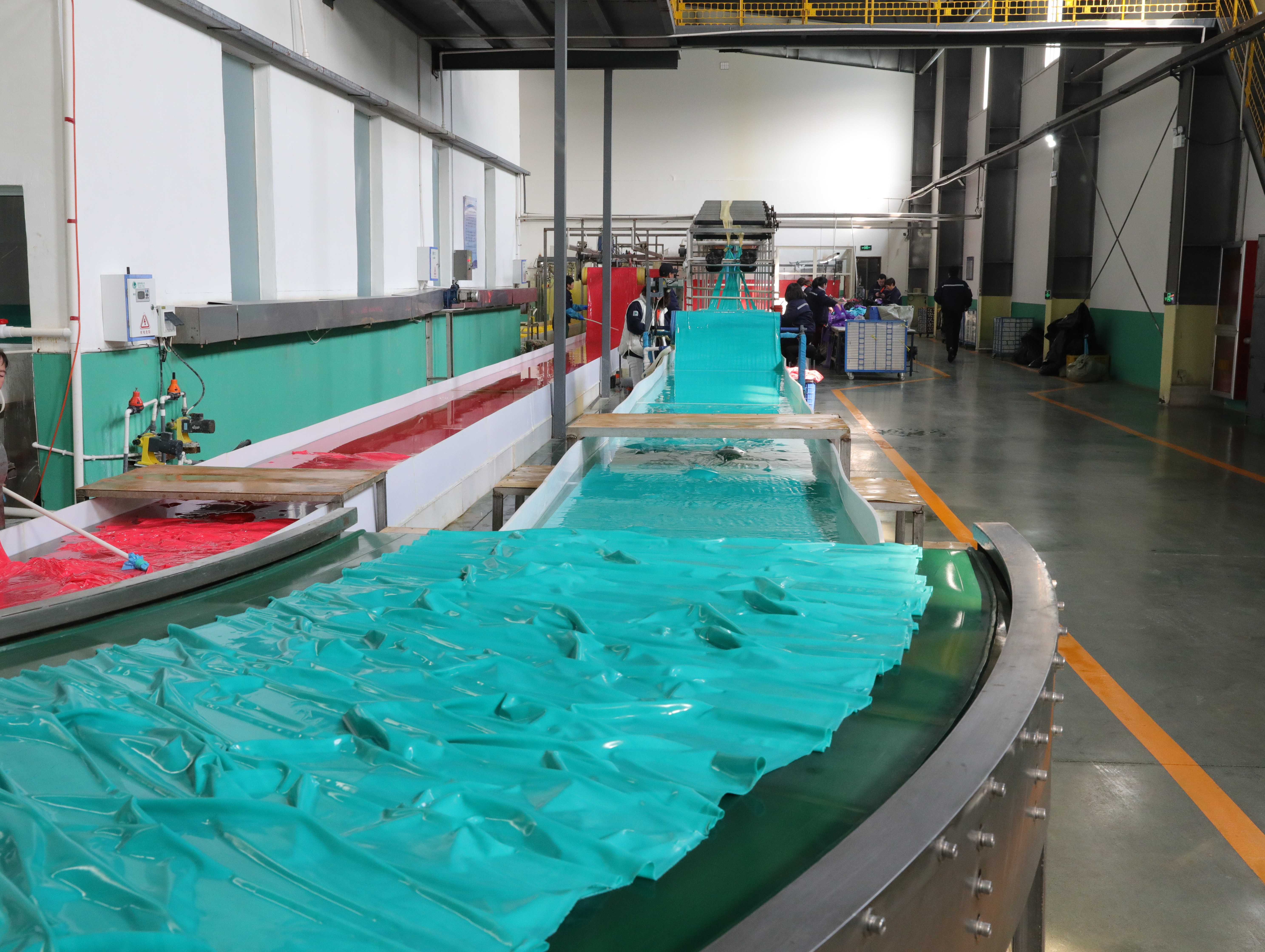
That is the purpose of the ±2% tension error margin and of unified production parameters: stable linear resistance efficiency across batches rather than per-batch variation. It is supported by 100% raw material inspection, full stretch, tension and fatigue testing on finished goods, and production capacity that keeps a SKU on the same lines — 24 dipped latex tubing lines at 120,000 meters per day and 2 dedicated latex band lines at 25,000 meters per day. A buyer should still verify the margin on incoming samples at each reorder.
MOQ is 100 pcs for stock items and 500 pcs for OEM customized orders. Delivery terms are FOB Qingdao, EXW Factory, or CIF major global seaports. Payment is 30% T/T advance deposit with 70% balance against copy of Bill of Lading, and Alibaba Trade Assurance is available for small orders. On cost, Libenli's comparison data states that latex carries a 15–20% higher initial acquisition cost than TPE while total cost of ownership is 50% lower because service life is 3–5 times longer — a calculation worth running on your own annual volume rather than on unit price alone.
Measure what is on the spec sheet: thickness with a gauge, width and length or circumference with a rule, and resistance at the stated elongation. Check that the flat face stays flat under load, and confirm the surface treatment matches the anti-slip or anti-rolling requirement. Then compare the sample against the supplier's test data for stretch, tension and fatigue. Libenli supports pre-production and pre-shipment inspection by the client or by a third party such as SGS, so sample approval and inspection can be tied to the same document set.
Four things, in order: whether the supplier can state a calibration margin and hold it on repeat orders; whether raw material and finished goods testing are routine rather than on request; whether the inspection route is documented and open to third parties; and whether the specification survives a change of material, width or logo without renegotiation. Libenli operates 24 dipped latex tubing lines and 2 dedicated latex band lines, runs 100% raw material inspection and full finished-goods testing, supports pre-production and pre-shipment inspection including SGS, and offers unconditional free return and replacement for defective products to reduce buyer after-sales risk. Capacity, tolerance discipline and a written replacement policy together are what make a multi-season supply plan safe.
Conclusion: Lock the Numbers, Then Lock the Supplier
Parameter specification for resistance bands is a short list executed precisely. Fix the loop geometry, fix thickness and width inside the published range, state the elongation basis for the resistance figure, and require a calibration margin that survives reorder. For low-load positioning work, the ZLQ-1 mini loop band covers 5–40 LB in a 600 mm, 50 mm wide anti-slip loop with a 30,000+ stretch service life. For heavy assistance work, the ZLQ-03 power loop band covers 8–230 LB over 2,080 mm with widths from 6.4 mm to 82.5 mm and latex or double layer construction.
Both families are specified to a ±2% tension error margin, and that single number is the difference between a catalogue item and a supply relationship. A buyer who writes it into the purchase order, ties it to inspection, and confirms it on the first reorder has removed the most common failure mode in this category: a product that quietly changes while the label stays the same.
Next step: confirm the specification on a sample
Request ZLQ-1 and ZLQ-03 samples against your stated load range and elongation basis, or send your current parameter sheet for a tolerance review before quoting. The full product catalogue, including band dimensions, materials and packaging options, is available here: Libenli resistance band catalogue (PDF).
Contact: Jacob · public@libenli.cn · WhatsApp +86 13864846995 · latextubing.com
Libenli is a manufacturer and exporter of latex tubing and latex resistance bands, established in 1997, with a 50,000 ㎡ plant, more than 300 employees and an R&D team of 20 engineers.
Have Questions or Need More Details?
Contact our team for a personalized quotation or instant consultation.
Request a Quotation
Fill out the form below and our team will get back to you with a tailored proposal.
WhatsApp Direct Chat
Prefer to chat in real-time? Message us on WhatsApp for instant assistance & quick answers.
- Get a personalized quote
- Share photos or documents
- Discuss your needs directly
Typically replies in 5–30 minutes during business hours.