
Resistance Band Long-Term Partnership FAQ: Supply, Quality & After-Sales Support
Resistance Band Long-Term Partnership FAQ: Supply, Quality & After-Sales Support
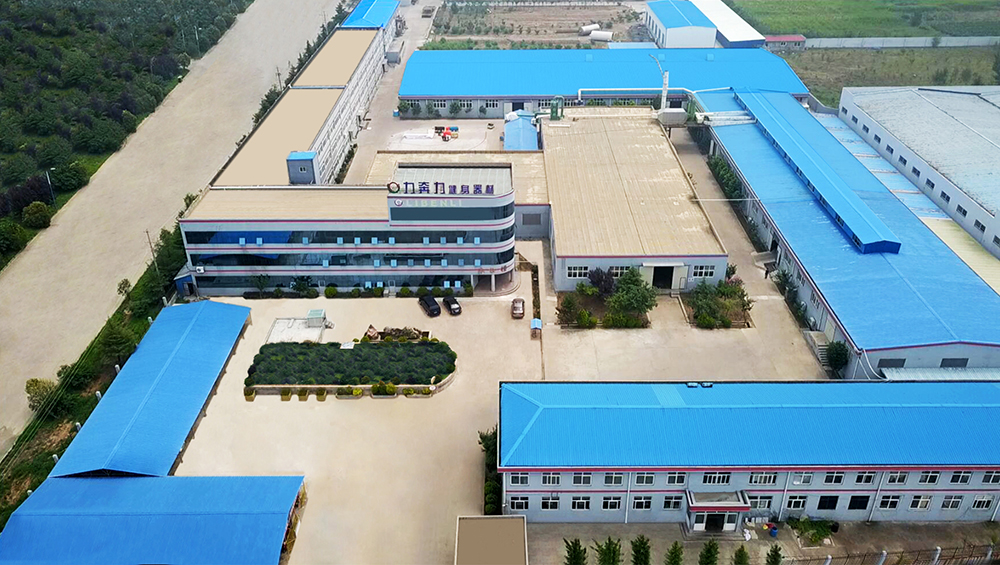
Cover: Libenli's 50,000 m² production site, where dipped latex tubing and latex resistance bands are made on dedicated lines.
Answer first: a long-term resistance band partnership is decided by four things a supplier can document, not by the lowest unit price on the first quotation — production capacity you can schedule against, a quality system that reproduces the same tension order after order, inspection access before every shipment, and a defined response when a defect appears. Libenli documents each of these areas for its resistance band range: 24 dedicated dipped latex tubing lines and 2 exclusive latex band lines, ISO 9000:2000 and ISO 9001:2008 certification, SGS-certified products, a ±2% tension tolerance, and a documented defect and complaint rate below 0.05%. This FAQ answers the questions buyers raise most often before committing to a multi-year program.
Why Long-Term Resistance Band Questions Differ From First-Order Questions
A single resistance band order is judged on delivery date and price per piece. A three-year supply program is judged on repeatability. The questions that appear in the second or third year of cooperation are not the questions asked in the first request for quotation: will band 50,000 match the approved sample, who pays for a failed batch, can our QC team or our testing lab attend inspection, and what happens when a retail customer in Germany or Canada files a complaint about tension?
Four risk areas concentrate the decision:
- Specification drift. Tension, thickness and width have to stay inside an agreed numeric window, not inside a comfortable range. A brand selling graduated resistance band sets cannot absorb tension variation between production runs, because the customer feels it immediately.
- Supply continuity. A partner who cannot hold a reorder rhythm forces a brand to re-source, re-test and re-document mid-season — usually at the worst possible moment.
- Documentation continuity. Certificates, test records and inspection reports must be reproducible for every shipment, not only for the first one that closed the deal.
- Defect handling. The commercial value of an after-sales clause depends entirely on whether there is a documented, repeatable process behind it.
Most of the questions answered below come from the procurement checklist Libenli receives from OEM buyers. They are answered here with facts the company can document, rather than with warranty language or promises that cannot be traced.
What the Resistance Band Market Looks Like Going Into 2026
A long-term sourcing decision is easier to justify when the demand base behind it is visible. The global resistance bands market was valued at approximately USD 1.7 billion in 2024 and is projected to reach USD 2.9 billion by 2030, a CAGR of 9.9% from 2025 to 2030 (Grand View Research). North America held the largest revenue share at 40.0% in 2024, and the health and sports clubs segment accounted for 70.6% of revenue in the same year, while individual use is the fastest-growing segment. Therapy and exercise bands alone are estimated at roughly 50% of the total market in 2024/2025 (Market Research Future).
Published estimates diverge — Global Market Insights places the 2024 market at USD 1.3 billion, while Data Bridge Market Research reports USD 1.86 billion for 2025 — mainly because each research house draws the boundary between clinical therapy products and retail fitness products differently. For a sourcing decision the direction of travel matters more than the decimal place: club, rehabilitation and home-use demand are all expanding, and each channel asks for a different band construction, a different documentation pack and a different reorder rhythm.
Two reference points recur in buyer compliance files. Resistance bands are commonly classified under HS Code 9506.91 (articles for general physical exercise, gymnastics or athletics), and fitness equipment entering the EU is commonly reviewed against the EN 20957 series for stationary training equipment in the context of CE marking. Buyers should confirm the applicable scope with their own compliance team, because classification depends on how the product is presented and marketed.
Upstream, the category depends on dipped natural latex tubing, a material whose tensile behaviour — not its appearance — determines whether a band feels the same at the start and the end of its service life. That is why long-term programs tend to be decided at the material and process level rather than at the packaging level.
What Libenli Documents for a Long-Term Resistance Band Partnership
Capacity and continuity
Libenli operates 24 dedicated production lines for dipped latex tubing with a daily output of 120,000 meters, alongside 2 exclusive production lines for latex bands with a daily capacity of 25,000 meters. The plant covers 50,000 m² with a workforce of more than 300 employees, including an R&D team of 20 engineers, and annual output reaches 65,000,000 units. The company also runs its own CNC molding machines and plastic injection molding equipment, which matters for programs that include handles, clips, buckles or other molded accessories.
For a long-term buyer, the practical reading of those numbers is scheduling headroom. A brand with seasonal peaks can place a reorder without waiting for a line to become free, and molded accessory supply does not depend on a third party whose schedule the buyer cannot see or influence.
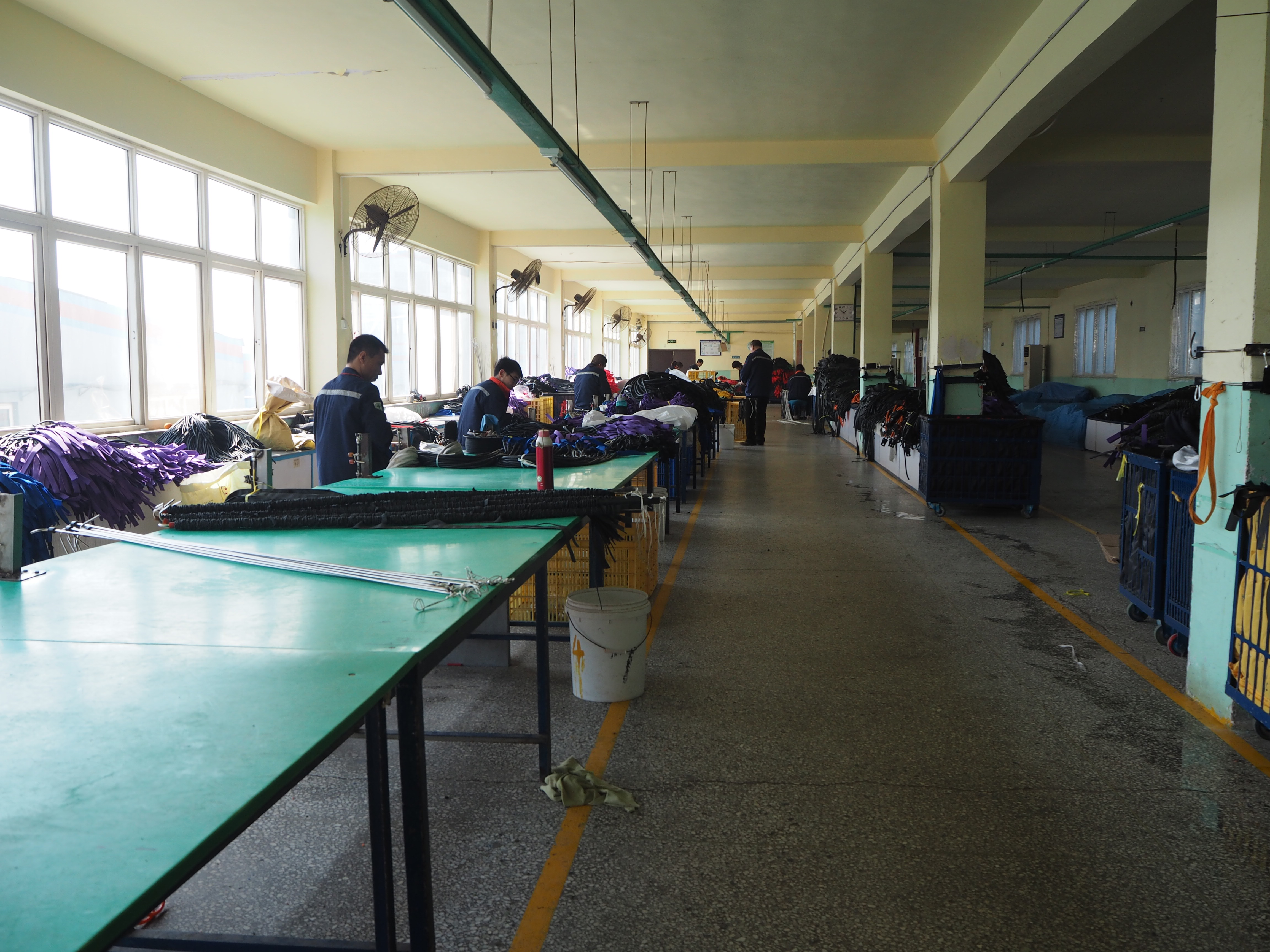
Assembly area: band components and molded accessories are processed under the same quality system as the latex tubing itself.
Quality system and certifications
Libenli holds ISO 9000:2000 Quality Certification, obtained in 2005, and ISO 9001:2008 Quality Management System Certification, obtained in 2010. The company also holds a 3A Credit Rating Certificate issued by the Ministry of Commerce of China and CCPIT. Most products are certified by SGS to meet international environmental and safety requirements, and all goods are non-toxic and eco-friendly. Alongside the certifications, the company holds 2 invention patents and 18 utility model patents.
Commercially, an ISO-based quality management system produces records a retail brand can file when a distributor, a marketplace or a customs broker asks how the product was controlled. SGS certification addresses the environmental and safety questions that appear most frequently in import documentation. Neither replaces a market-specific compliance check, but both shorten the documentation loop on every reorder.
Process controls and finished-goods testing
Quality assurance procedures include 100% raw material inspection before production and complete stretch, tension and fatigue tests for all finished goods. Production parameters are unified across lines to keep linear resistance consistent through the full range of motion, and finished bands carry an anti-oxidation coating. Where latex allergy is a concern in the destination market, a latex-free TPE alternative is available.
Two of these controls answer long-term questions directly. Inspecting 100% of raw material is the earliest possible point to catch latex that would otherwise behave differently under load, before it becomes an expensive finished batch. Fatigue and tension testing on finished goods is what allows a supplier to state a tension tolerance as a number instead of describing tension as a feeling.
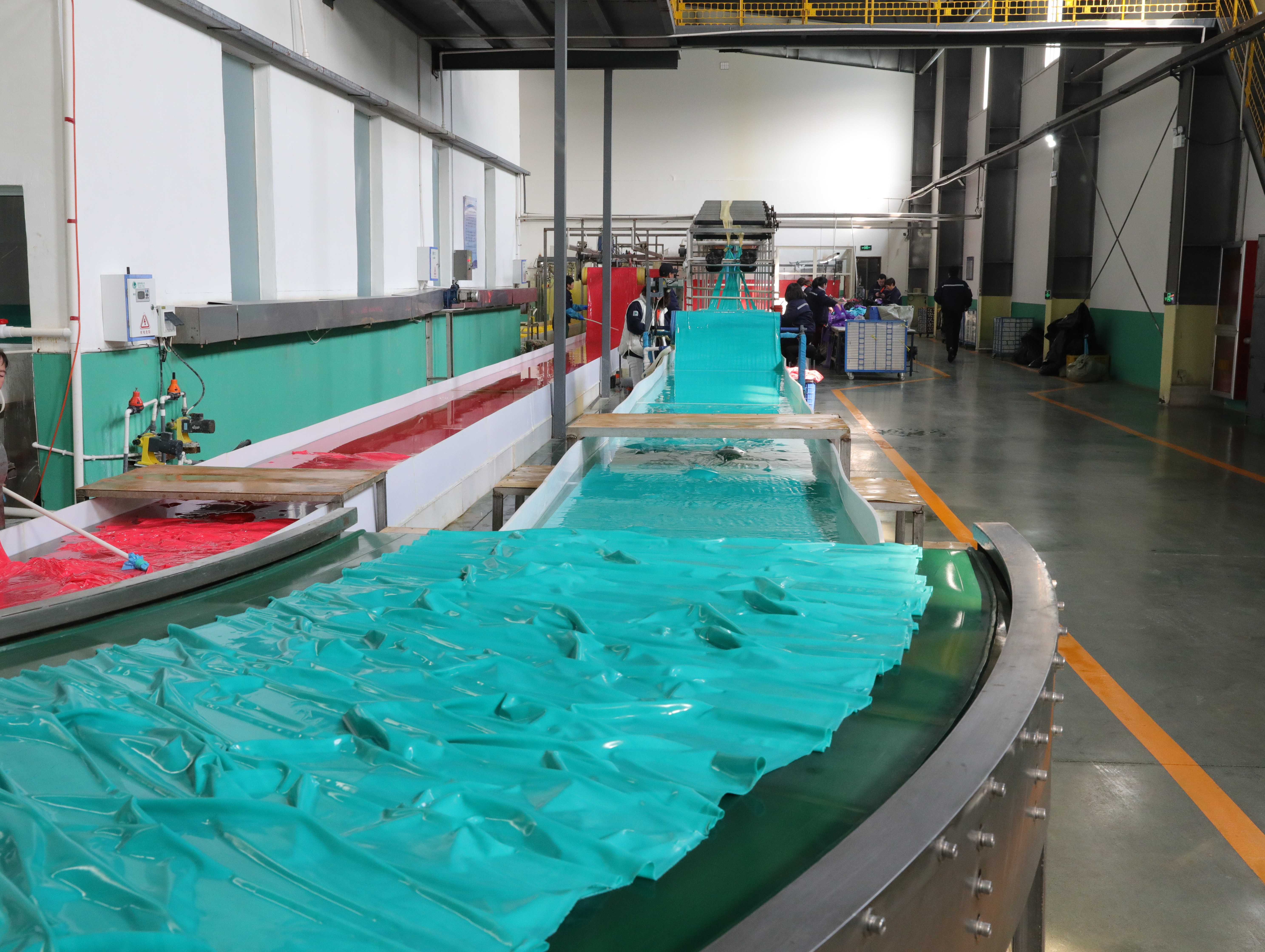
Washing and cooling stage in dipped latex tubing production — one of the process controls that keeps material behaviour consistent between batches.
Documented performance and the after-sales structure
On performance, Libenli states a tension accuracy of ±2% against an industry average of ±15%, elongation of up to 600%, and fatigue resistance of more than 10,000 stretch cycles with less than 3% deformation. Internal quality performance is documented at a defect and complaint rate below 0.05%. The stated policy on defective products is unconditional free return and replacement, which is how after-sales reliability is presented here — as a documented quality outcome and a defined remedy, not as an unverified warranty period.
After-sales support runs through a single contact channel: public@libenli.cn and +86 13864846995. A technical question about a specification, a complaint and a reorder request reach the same place, which shortens response time on exactly the issues that decide whether a partnership survives its second year. ZLQ-1 mini loop bands and ZLQ-03 pull up bands are the two product families that appear most often in repeat programs.
Setting Up a Long-Term Resistance Band Program, Step by Step
- Scope the program before pricing it. Decide which families stay in the line year-round — mini loop bands, pull up assist bands, long resistance bands, resistance band sets with handles, or fabric and TPE variants — and how much of the range is likely to be replaced after the first season.
- Lock the specification in numbers. Thickness, width, length, colour, tension level and packaging should be written into a spec sheet with a stated tolerance window. The ±2% tension calibration is the figure that makes a repeat order comparable with the approved sample.
- Validate with samples. Approve a pre-production sample and keep it as the reference standard. Materials behave differently over repeated stretching, so the reference sample must be the exact construction you intend to reorder.
- Agree commercial terms. MOQ is 100 pcs for stock items and 500 pcs for OEM customized orders. Delivery terms include FOB Qingdao, EXW Factory and CIF major global seaports. Payment terms are 30% T/T advance deposit with the 70% balance against a copy of the Bill of Lading, and Alibaba Trade Assurance payment is available for small orders.
- Confirm inspection access in advance. Ask for pre-production inspection and pre-shipment inspection, carried out either by your own QC team or by a third-party organization such as SGS.
- Run production with in-line control. 100% raw material inspection before production, unified production parameters to stabilise linear resistance, anti-oxidation coating, and complete stretch, tension and fatigue tests for finished goods.
- Approve before shipment. Acceptance inspection includes 100% full pre-shipment inspection. This is the last point at which a deviation costs a fraction of what it costs after the container has sailed.
- Set the repeat-order rhythm and the claim path. Confirm who receives a complaint, in what form, and what documentation is required. A replacement policy for defective products is only useful if the reporting route was agreed before the first problem appeared.
Partnership terms at a glance
| Item | Documented terms |
|---|---|
| MOQ | 100 pcs for stock items; 500 pcs for OEM customized orders |
| Delivery terms | FOB Qingdao, EXW Factory, CIF major global seaports |
| Payment terms | 30% T/T advance deposit, 70% balance against copy of Bill of Lading; Alibaba Trade Assurance available for small orders |
| Acceptance inspection | 100% full pre-shipment inspection |
| Third-party inspection | Pre-production and pre-shipment inspection supported by clients or third-party organizations such as SGS |
| Defect handling | Unconditional free return and replacement for defective products |
| Contact channel | public@libenli.cn / +86 13864846995 |
Where a Long-Term Partnership Fits: Four Buyer Situations
1. A retail brand running a fixed annual range
The need is identical tension across repeated production runs, consistent packaging, and a supplier that can absorb a seasonal peak without pushing delivery into the following quarter. The relevant facts are scheduling headroom from 24 tubing lines and 2 band lines, a ±2% tension tolerance, and 100% pre-shipment inspection on every batch. For this buyer, the partnership value is not capacity in the abstract; it is the ability to reorder the same SKU in month nine and receive the same band as in month one.
2. A gym and rehabilitation distributor
Rehabilitation buyers care about predictable elongation and graduated tension, because a therapist changes resistance in small steps. Elongation of up to 600% and fatigue resistance of more than 10,000 stretch cycles with less than 3% deformation are the relevant performance points, and the latex-free TPE alternative matters for clinics and patients with latex allergy concerns. Pre-production inspection gives this buyer a chance to validate tension steps before a full run.
3. A private-label or custom logo program
Customization changes the commercial picture: OEM customized orders start at 500 pcs, sampling and pre-production inspection become the gating step, and printed or molded accessories have to arrive on the same schedule as the bands. In-house CNC molding and plastic injection molding equipment keeps those components inside the same quality system, and the company's 2 invention patents and 18 utility model patents sit behind ongoing product development rather than behind a single catalogue item.
4. A wholesaler or importer serving several markets
Multi-market sellers need documentation that travels: ISO 9000:2000 and ISO 9001:2008 certification, SGS-certified products, the 3A Credit Rating Certificate, HS Code 9506.91 on the commercial documents, and a compliance conversation around EN 20957 where EU fitness equipment is involved. The partnership value here is repeatable paperwork, because a missing certificate on one shipment can hold up an entire container.
All four situations point to the same conclusion, but not to the same numbers. A brand should weight tension tolerance and reorder rhythm; a rehab distributor should weight elongation consistency and material options; a wholesaler should weight documentation. A supplier chosen on unit price alone rarely satisfies more than one of the four.
Natural Latex vs. TPE: What the Difference Means Over a Multi-Year Program
Material choice is one of the few decisions in a resistance band program that is expensive to reverse, because it changes both the retail claim and the reorder economics. The table below summarises Libenli's stated comparison between its natural latex bands and traditional TPE or low-grade synthetic latex product.
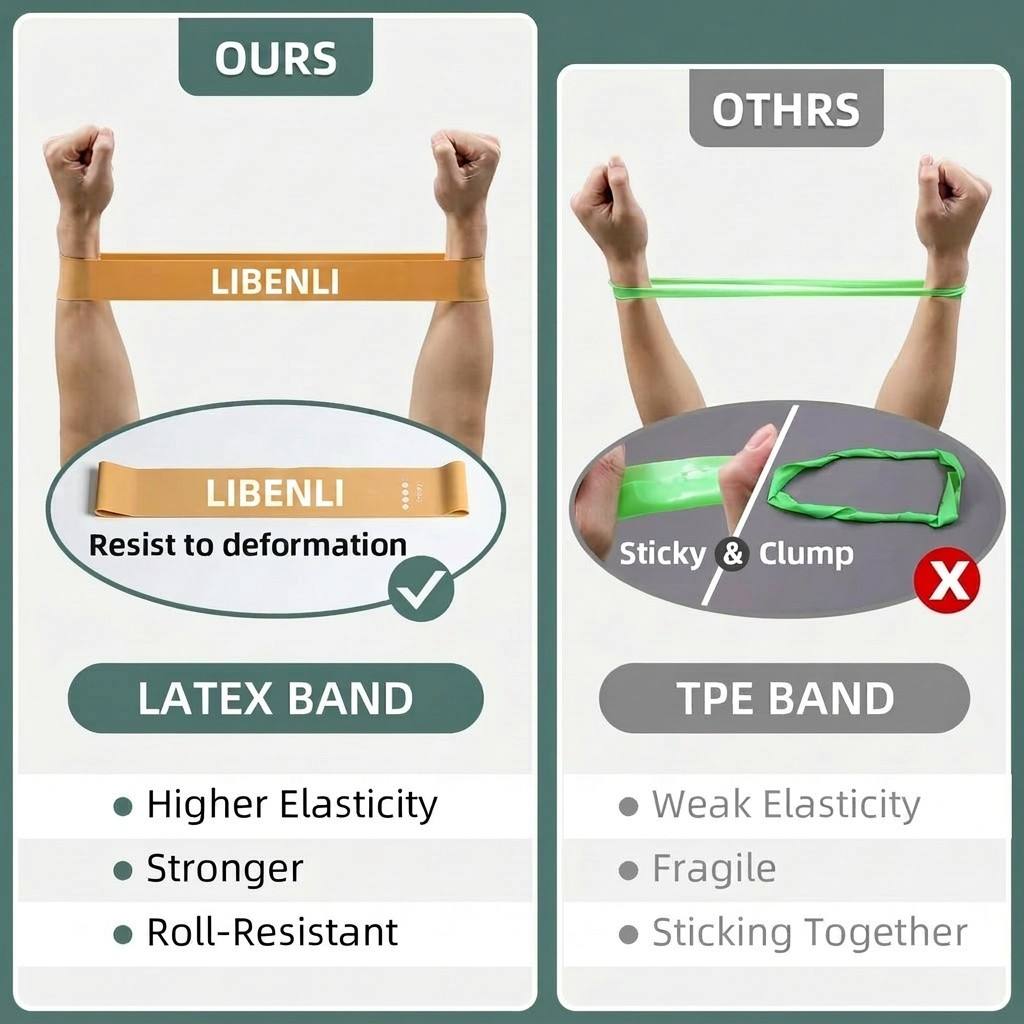
Material comparison: natural latex bands versus traditional TPE and low-grade synthetic latex product.
| Comparison point | Libenli natural latex bands | Traditional TPE / low-grade synthetic latex bands |
|---|---|---|
| Elongation | Up to 600% | Approximately 300% |
| Fatigue resistance | 10,000+ stretch cycles with less than 3% deformation | Under 2,000 cycles, with significant permanent deformation |
| Tension accuracy | ±2% tension error margin | ±15% industry average |
| Surface behaviour | Anti-oxidation coating; negligible powdering in high-frequency use | Higher incidence of powdering and breakage under the same use |
| Initial acquisition cost | 15–20% higher than TPE | Lower initial cost |
| Lifecycle economics | Total cost of ownership about 50% lower, based on a service life 3–5 times longer | More frequent replacement during the same period |
| Typical fit | Commercial gyms, medical rehabilitation centers, premium home-fitness retail | Short-life promotional and entry-level retail programs |
Read the table as a decision tool rather than a verdict. A premium retail program that promises a specific tension progression usually recovers the higher acquisition cost through fewer warranty conversations and a longer replacement cycle; an entry-level promotional program with a single-season lifecycle may legitimately choose the lower-cost construction. What matters for a long-term partnership is that the choice is made deliberately and written into the specification, so reorders do not quietly drift to a different material.
FAQ: Long-Term Resistance Band Partnership, Supply, Quality and After-Sales
1. What certifications and documentation should a long-term resistance band supply partner provide?
Libenli holds ISO 9000:2000 Quality Certification, obtained in 2005, and ISO 9001:2008 Quality Management System Certification, obtained in 2010, plus a 3A Credit Rating Certificate issued by the Ministry of Commerce of China and CCPIT. Most of its resistance band products are certified by SGS to meet international environmental and safety requirements, all goods are described as non-toxic and eco-friendly, and the company holds 2 invention patents and 18 utility model patents. For export paperwork, resistance bands are commonly classified under HS Code 9506.91, and buyers shipping fitness equipment into the EU commonly review the EN 20957 series in the context of CE marking. Because documentation requirements differ by destination and by retail channel, the certificate list should be matched to each market before the first order rather than after.
2. What makes a long-term resistance band supply partner in China reliable?
The test is not total volume but whether capacity matches your SKU mix and reorder rhythm. Libenli operates 24 dedicated dipped latex tubing production lines with a daily output of 120,000 meters and 2 exclusive latex band lines producing 25,000 meters per day. The facility covers 50,000 m², employs more than 300 people and includes an R&D team of 20 engineers, with annual output of 65,000,000 units. In-house CNC molding and plastic injection molding equipment means that molded components and hardware accessories for bands with handles or clips are produced under the same quality system as the bands themselves, which is what keeps an accessory-dependent program from splitting across suppliers.
3. What are the purchasing terms and acceptance criteria for a long-term resistance band agreement?
MOQ is 100 pcs for stock items and 500 pcs for OEM customized orders. Delivery terms include FOB Qingdao, EXW Factory and CIF major global seaports. Payment terms are a 30% T/T advance deposit with the 70% balance against a copy of the Bill of Lading, and Alibaba Trade Assurance payment is available for small orders. Acceptance criteria are 100% full pre-shipment inspection, with pre-production and pre-shipment inspections supported for clients and for third-party organizations such as SGS. These terms cover the commercial side of a repeat program; the technical side — tolerance windows, packaging specification and material grade — should be attached to the same document.
4. How are samples and third-party inspections handled before mass production?
Sampling follows the same quality path as production. Quality assurance procedures begin with 100% raw material inspection before production, and all finished goods undergo complete stretch, tension and fatigue tests. Pre-production and pre-shipment inspections can be conducted by the client's own team or by a third-party organization such as SGS, and acceptance inspection includes 100% full pre-shipment inspection. Documented internal quality performance stands at a defect and complaint rate below 0.05%, and the stated policy for defective products is unconditional free return and replacement. A buyer who wants that policy to be usable should agree the complaint route and the evidence required — photos, batch code, quantity — before production starts.
5. What about lead times, reorders and after-sales support once a partnership is running?
Lead time is not a fixed number; it depends on the specification, quantity and season, which is why buyers generally evaluate scheduling against capacity data rather than a single quoted figure. The production base that reorder scheduling is built on is 120,000 meters per day of dipped latex tubing and 25,000 meters per day of latex bands. On the after-sales side, one contact channel handles technical questions, complaints and reorders: public@libenli.cn or +86 13864846995. To move from evaluation to execution, download the current catalog and specification sheet, confirm the tolerance window and the inspection plan in writing, then start with a pre-production sample before committing the first production order.
Request the catalog and specification sheet
Catalog (PDF): Libenli resistance band and latex tubing catalog
Conclusion
A long-term resistance band partnership is not a larger version of a first order. It is a set of documented conditions: capacity that can absorb reorders, a quality system that holds tension inside a ±2% tolerance, inspection access at both the pre-production and pre-shipment stage, certification and test records that repeat with every shipment, and a replacement rule for defective products that both sides have agreed how to use. Libenli's documented position covers 24 dipped latex tubing lines with 120,000 meters of daily output, 2 latex band lines producing 25,000 meters per day, ISO 9000:2000 and ISO 9001:2008 certification, SGS certification for most products, and a defect and complaint rate below 0.05%.
For a buyer at the decision stage, the practical next step is to convert these facts into a written specification: band families, material, tension tolerance, packaging, MOQ, inspection plan and claim route. For a buyer at the execution stage, the work moves to the sampling and pre-production inspection stage, where the tension you approve becomes the tension you receive for the rest of the program.
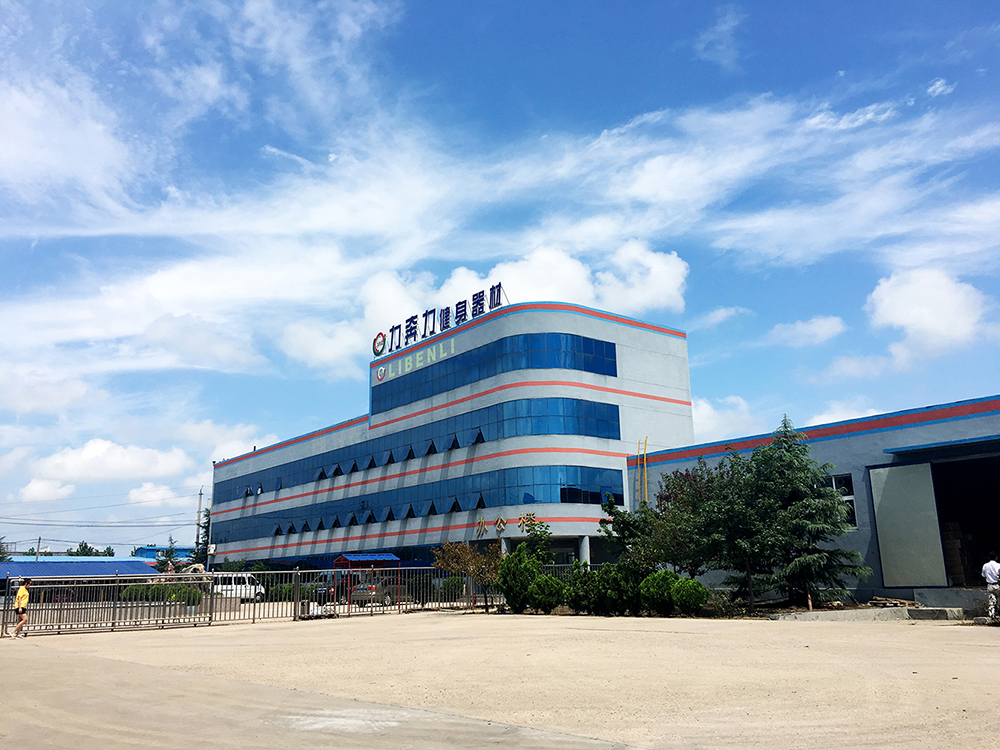
Libenli has manufactured and exported latex tubing and latex resistance bands since 1997.
Next step: turn these answers into an order plan
Send your resistance band specification — material, thickness, length, tension level, logo and packaging — for a quotation and a sampling plan. MOQ starts at 100 pcs for stock items and 500 pcs for OEM customized orders, and pre-production and pre-shipment inspection by your own team or a third party such as SGS is supported.
Catalog (PDF): Download the resistance band catalog
Email: public@libenli.cn
Tel / WhatsApp: +86 13864846995
Website: www.latextubing.com
Have Questions or Need More Details?
Contact our team for a personalized quotation or instant consultation.
Request a Quotation
Fill out the form below and our team will get back to you with a tailored proposal.
WhatsApp Direct Chat
Prefer to chat in real-time? Message us on WhatsApp for instant assistance & quick answers.
- Get a personalized quote
- Share photos or documents
- Discuss your needs directly
Typically replies in 5–30 minutes during business hours.