
Latex Resistance Band Compliance: ISO, SGS & Export Standards
Latex Resistance Band Compliance: ISO, SGS & Export Standards
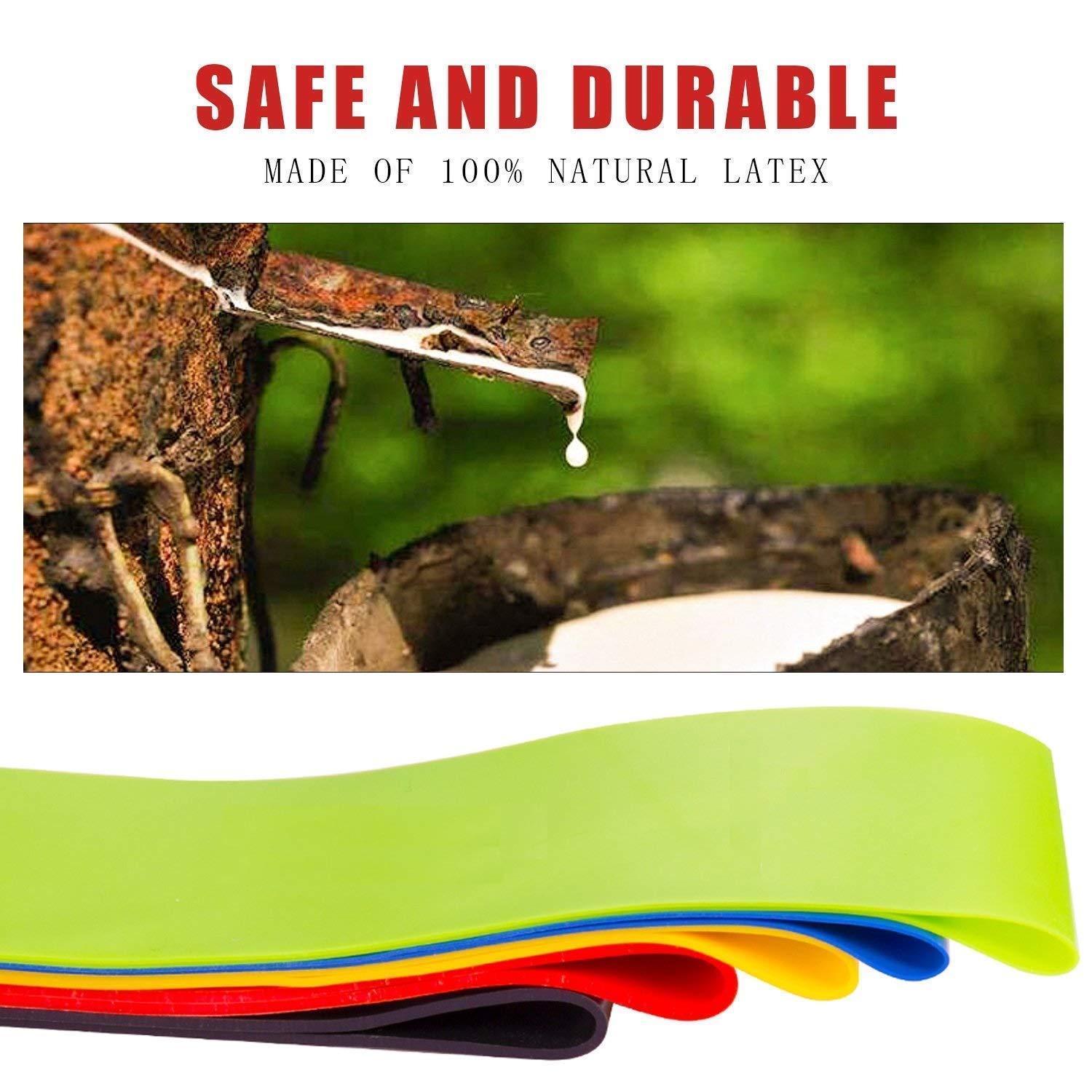
Natural latex — the material layer that determines which compliance documents a resistance band order actually needs.
Compliance is the first filter in a latex resistance band order, not a document attached at the end of it. A buyer selling into Germany, the USA, the UK, France or Canada needs two things from a manufacturer: a certified quality management system, and item-level material testing that confirms the product is non-toxic and eco-friendly.
Haiyang Libenli Body-Building Apparatus Co., Ltd. holds ISO 9000:2000 Quality Certification (2005) and ISO 9001:2008 Quality Management System Certification (2010). Most items are certified by SGS to meet international environmental and safety requirements, and the company holds 2 invention patents and 18 utility model patents. Export business accounts for 70% of total sales, with Germany, the USA, the UK, France and Canada as major markets.
This guide explains what each document covers, what it does not cover, and how a buyer can verify the claims before mass production begins.
Why Compliance Is a Sourcing Decision, Not a Paperwork Step
A resistance band looks like a simple product, but it is stretched thousands of times, it contacts skin directly, and it is frequently used in rehabilitation and clinical settings. That combination pushes documentation requests earlier in the buying process than for most other fitness accessories.
Three separate compliance layers exist, and suppliers often blur them together:
- Material and safety testing — third-party laboratory confirmation that the latex or TPE compound is non-toxic and environmentally safe, normally issued per item or per material.
- Quality management certification — ISO-based certification of how a factory designs, produces and controls quality, covering the production system rather than one batch.
- Market entry requirements — the standards and customs classifications that apply in the destination country.
Two failure patterns appear repeatedly. The first: a supplier sends one SGS report issued for one product and presents it as coverage for an entire catalogue, including items made from a different compound. The second: the certificate holder name on the ISO document does not match the company issuing the quotation, which usually indicates a trading intermediary rather than the factory itself.
The practical question for a buyer is therefore not "does this supplier have certificates", but "which certificate covers the exact item, material and destination market I am buying for".
The Market Context Behind Rising Documentation Requirements
The global resistance bands market was valued at approximately USD 1.7 billion in 2024 and is projected to reach USD 2.9 billion by 2030, growing at a CAGR of 9.9% from 2025 to 2030, according to Grand View Research. North America held the largest revenue share at 40.0% in 2024.
Within that market, health and sports clubs dominated with a 70.6% revenue share in 2024, while individual use is the fastest-growing segment (Grand View Research). Individual consumers buy through retail and e-commerce channels, where a listing can be challenged or removed if material safety documentation is missing — which is why importers increasingly ask for the compliance file first and the price second.

Aerial view of the Libenli production site — certification claims are tied to a specific factory, not to a trading office.
Two reference points matter for cross-border trade:
- In the European Union, fitness equipment such as resistance bands entering the market must comply with the EN 20957 series (Stationary training equipment) for CE marking, according to the European Committee for Standardization (CEN).
- Resistance bands are commonly classified under HS Code 9506.91 — articles for general physical exercise, gymnastics or athletics — according to the World Customs Organization and USITC.
Buyer note: EN 20957 and HS Code 9506.91 are destination-market requirements, not manufacturer claims. Confirm their applicability for your specific item and market with the supplier and your customs broker before the order is confirmed.
Libenli's Certification Stack: What Each Document Covers
Haiyang Libenli Body-Building Apparatus Co., Ltd., established in 1997, specializes in the design, R&D and production of latex tubing and latex resistance bands. Its compliance position rests on three separate pillars: certified quality management, third-party material testing, and registered intellectual property.
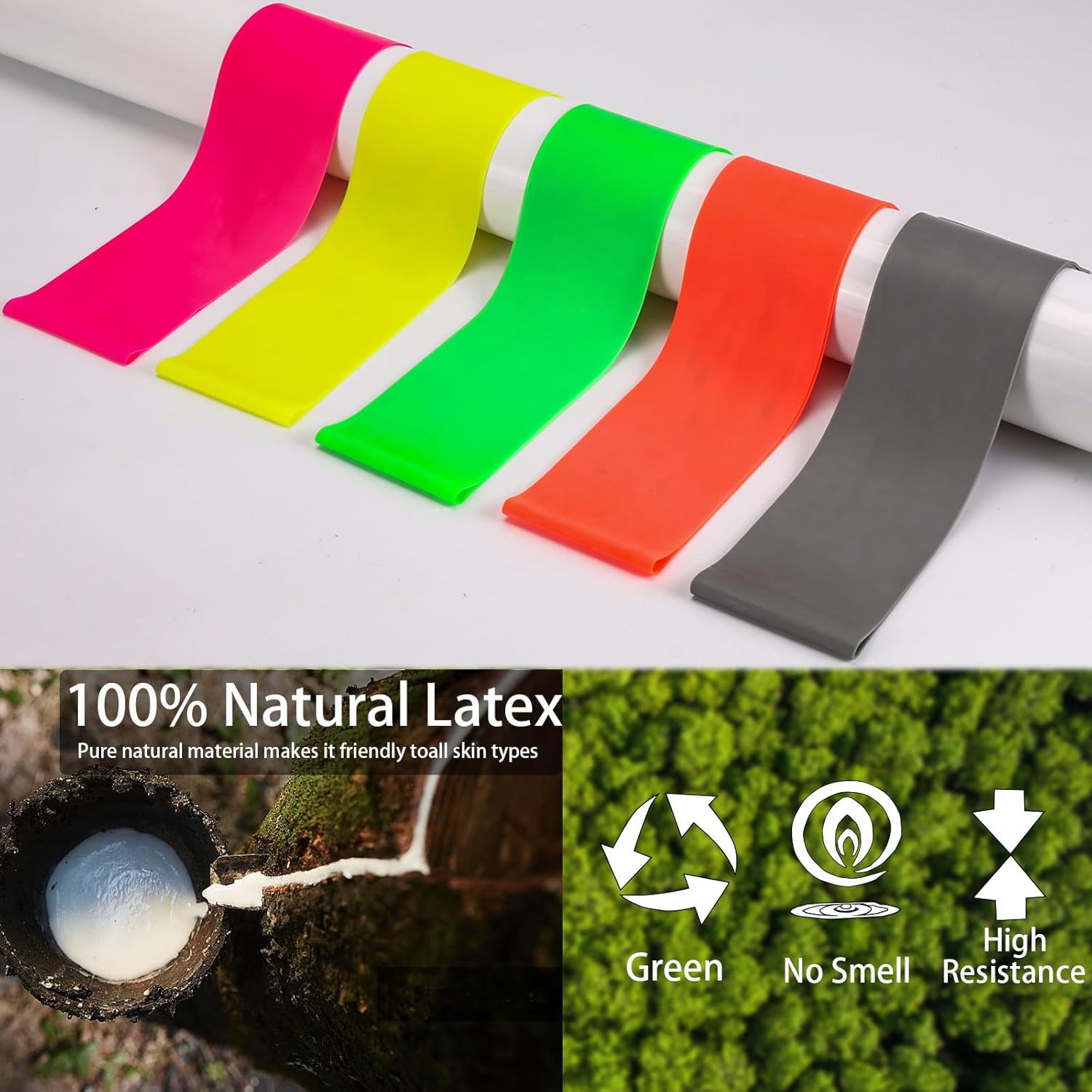
Non-toxic, eco-friendly latex compound — the material layer that SGS testing addresses for most Libenli items.
Pillar 1 — Quality management certification
- ISO 9000:2000 Quality Certification, obtained in 2005.
- ISO 9001:2008 Quality Management System Certification, obtained in 2010.
- 3A Credit Rating Certificate, issued by the Ministry of Commerce of China and CCPIT.
What this means for a buyer: these documents cover the management system behind production — incoming material checks, process control and inspection routines — rather than the performance of a single shipment. They answer the question "can this factory reproduce the same band consistently?", not "is this specific batch safe?".
Pillar 2 — SGS certification for environmental and safety performance
All Libenli goods are non-toxic and eco-friendly, and most items are certified by SGS to meet international environmental and safety requirements. This is the layer that speaks directly to skin contact, odour and restricted-substance questions raised by retailers, rehabilitation clinics and brand owners. Because the testing is applied per item, buyers should request the report that matches the specific product and material they intend to order.
Pillar 3 — 2 invention patents and 18 utility model patents
Libenli holds 2 invention patents and 18 utility model patents for new products, supported by an R&D team of 20 engineers. For buyers, the patent count is a signal about how the supplier works: it indicates ongoing product development rather than catalogue reselling, and it gives OEM buyers a clearer picture of who actually owns the design being quoted.
Production capacity behind the certificates
- Factory area of 50,000 m² with approximately 300 staff.
- 24 dedicated production lines for dipped latex tubing, daily output 120,000 meters.
- 2 exclusive production lines for latex bands, daily capacity 25,000 meters.
- Annual production capacity of 65,000,000 units.
- Export business accounting for 70% of total sales, with major markets including Germany, USA, UK, France and Canada.
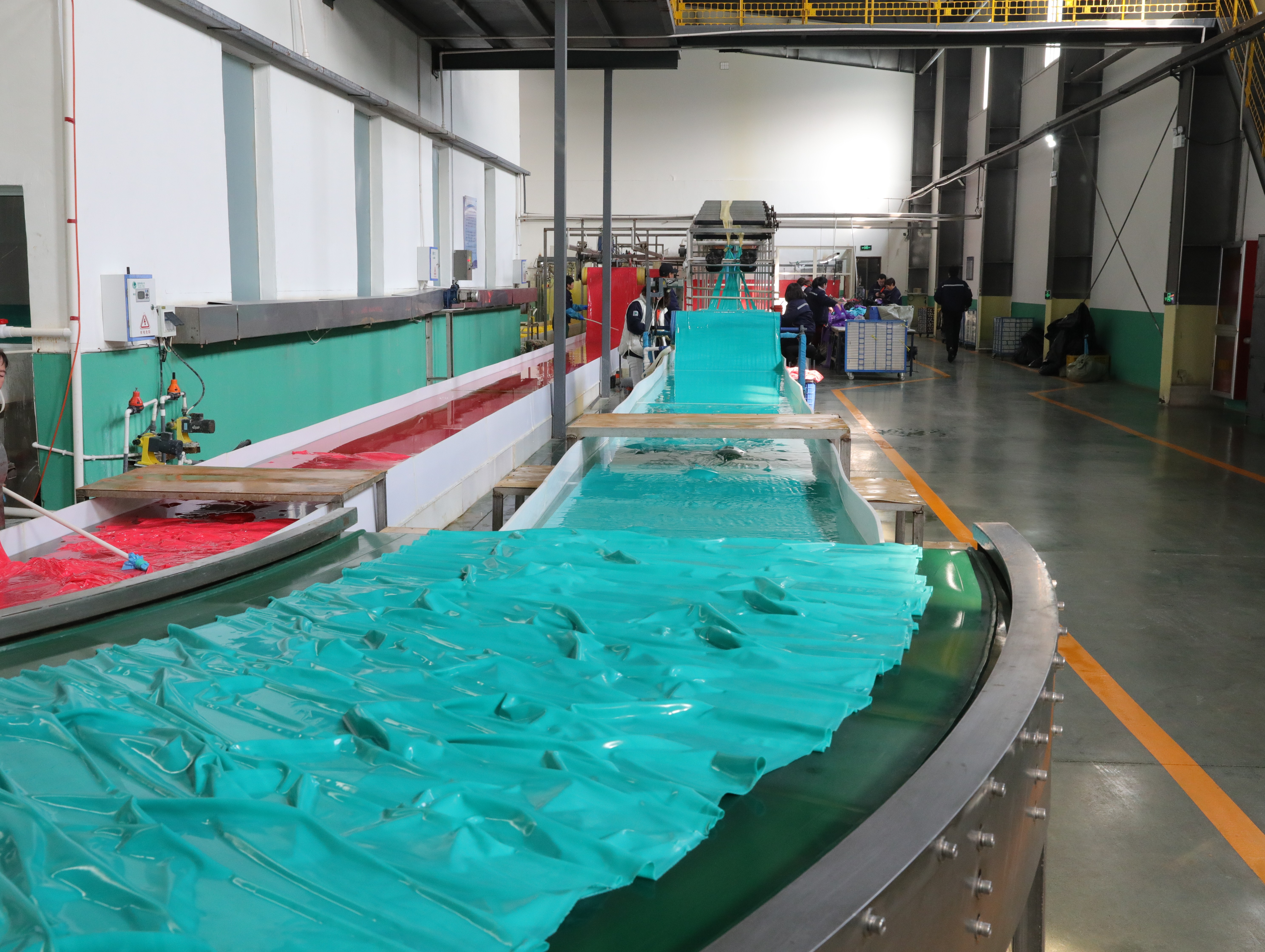
Washing and cooling stage — production process control is what ISO 9001:2008 certification is designed to evidence.
How Buyers Should Verify Certification Claims: A Six-Step Check
Verification is a sequence, not a single email. Each step below closes one specific gap that otherwise surfaces after the deposit has been paid.
Step 1 — Request the full certificate set in writing before the quotation stage
Ask for the certificate copies at the same time as the price. A supplier that treats compliance documents as a post-order formality is a supplier that may expect the buyer not to check them.
Step 2 — Check the certificate holder name and issue year
The name on the document should read Haiyang Libenli Body-Building Apparatus Co., Ltd. Libenli's ISO 9000:2000 Quality Certification dates from 2005 and its ISO 9001:2008 Quality Management System Certification from 2010. A mismatch between the certificate holder and the quoting company is the clearest available signal that you are speaking to an intermediary.
Step 3 — Match the document to the item and material you are buying
Specify whether your order is latex or TPE, and whether it is a mini loop band or a power loop band. Ask the supplier to state which certificate covers that item rather than providing a general file.
Step 4 — Ask for the SGS report that applies to your item
Since most — not all — Libenli items are SGS certified, the buyer's question should be: "Is the exact item I am ordering covered, and can I see that report?" A supplier without a specific report should say so rather than substituting a neighbouring product's document.
Step 5 — Confirm destination-market requirements
For the EU, check whether the EN 20957 series applies to your product configuration; for customs, confirm whether HS Code 9506.91 is the correct classification for your shipment. These are buyer-side checks that sit outside the manufacturer's certificate set, and they should be resolved before production is scheduled.
Step 6 — Validate with a sample before mass production
Documents describe a system; a sample tests the actual band. Request samples of the specific resistance level, thickness and colour you plan to order, then compare them against the specification sheet and the referenced test report.
Where Certified Latex Resistance Bands Are Used
Compliance expectations vary with the end use, so the same material can carry different documentation requirements depending on where the band finally ends up.
- Home fitness and retail sets — the ZLQ-1 mini loop band, in latex or TPE, is designed for home fitness with an anti-slip feature and a resistance range of 5LB to 40LB.
- Yoga and Pilates studios — the ZLQ-1 is also suitable for yoga and Pilates, where low resistance and skin comfort matter more than peak tension.
- Hip and glute training — the 50mm band width helps the loop hold position during lateral and glute work.
- Sports rehabilitation and physical therapy — both models are intended for rehabilitation and therapy settings, where non-toxic, skin-friendly material matters most.
- Gym and outdoor training — the ZLQ-03 pull up band, a power loop band also available as a double layer power loop band, covers a resistance level from 8LB to 230LB for fitness gym, home workout and outdoor training use.
Typical working conditions for these products are an indoor, normal room-temperature environment between -10°C and 50°C, in a dry and low-dust setting, with manual pulling and repeated tension exercise. Matched equipment includes yoga mats, fitness handles, ankle straps and workout storage bags.
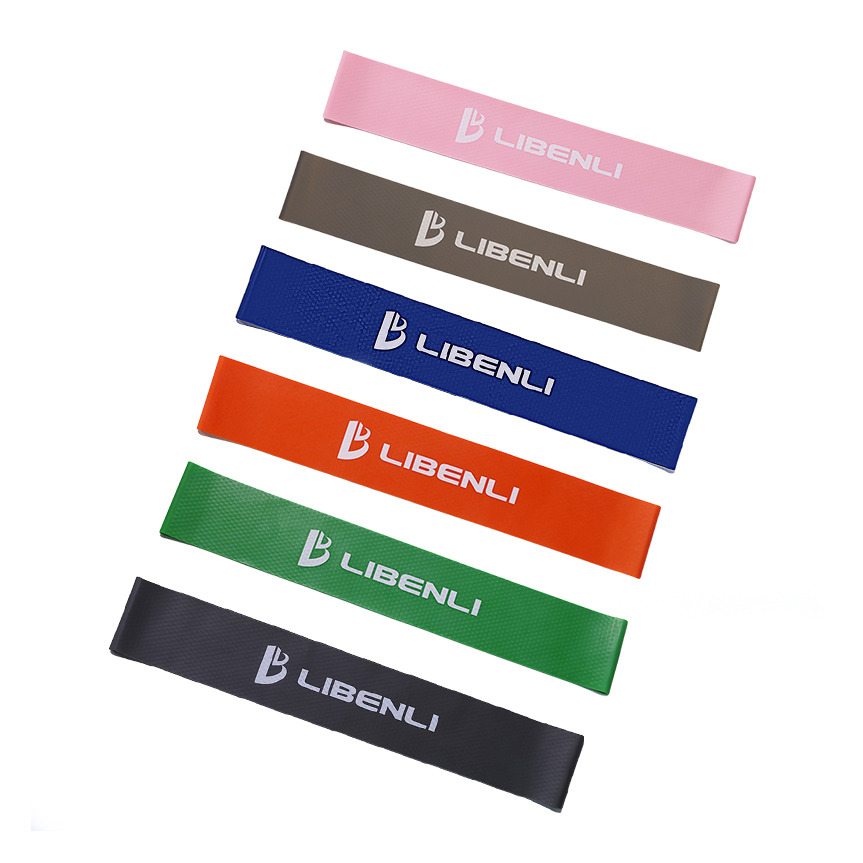
Mini loop bands in multiple resistance colour grades — colour coding is often part of a retail buyer's labelling and compliance requirements.
Reference Tables
Table 1 — Certification and compliance reference
| Document or standard | Type | Held or referenced by | What it tells a buyer | What to verify |
|---|---|---|---|---|
| ISO 9000:2000 Quality Certification (2005) | Quality certification | Libenli | A formal quality system was assessed in 2005 | Certificate holder name and year |
| ISO 9001:2008 Quality Management System Certification (2010) | Quality management system | Libenli | Design, production and quality control follow a certified system | Scope of certification and current validity |
| SGS certification | Third-party material testing | Libenli — most items | Non-toxic and eco-friendly material meeting international environmental and safety requirements | Report matching your exact item and material |
| 3A Credit Rating Certificate | Credit and business integrity rating | Libenli — issued by the Ministry of Commerce of China and CCPIT | Third-party assessment of the company's trade credibility | Issuing body and certificate copy |
| 2 invention patents; 18 utility model patents | Intellectual property | Libenli | Product development activity rather than catalogue reselling | Patent references where relevant to your OEM design |
| EN 20957 series | EU product standard for CE marking | Referenced by the European Committee for Standardization (CEN) | Applies to stationary training equipment entering the EU market | Whether it applies to your configuration |
| HS Code 9506.91 | Customs classification | World Customs Organization / USITC | Articles for general physical exercise, gymnastics or athletics | Confirm with your customs broker |
Table 2 — Product specification reference: ZLQ-1 and ZLQ-03
| Specification | ZLQ-1 resistance band | ZLQ-03 pull up band |
|---|---|---|
| Type | Mini loop band; mini loop band with anti-slip | Power loop band; double layer power loop band |
| Material | Latex / TPE | Latex |
| Resistance | 5LB–40LB | 8LB–230LB |
| Thickness | 0.3mm–1.2mm | 0.45mm |
| Width | 50mm | 6.4mm–82.5mm |
| Length / circumference | Circumference 600mm | Length 2080mm |
| Durability claim | Fatigue resistance ≥30,000 stretches | Service life ≥20,000 stretches |
| Applicable use | Home fitness, yoga & Pilates, hip & glute training, sports rehabilitation, physical therapy, gym training equipment | Fitness gym, home workout, sports rehabilitation, yoga training, physical therapy, outdoor training |
Frequently Asked Questions
What certification should a latex resistance band manufacturer hold for international export?
Two layers matter. The first is quality management certification, which shows that the factory's production and quality-control system has been assessed — Libenli holds ISO 9000:2000 Quality Certification (2005) and ISO 9001:2008 Quality Management System Certification (2010). The second is item-level material testing from a third-party laboratory confirming that the product is non-toxic and environmentally safe; most Libenli items are certified by SGS to meet international environmental and safety requirements. Buyers should treat the two as complementary, not interchangeable.
Does Libenli have ISO and SGS certification for its resistance bands?
Yes. Haiyang Libenli Body-Building Apparatus Co., Ltd. holds ISO 9000:2000 Quality Certification obtained in 2005 and ISO 9001:2008 Quality Management System Certification obtained in 2010, and it also holds a 3A Credit Rating Certificate issued by the Ministry of Commerce of China and CCPIT. On the material side, all goods are non-toxic and eco-friendly, with most items certified by SGS. Because SGS coverage applies to most — not all — items, buyers should confirm that the report provided matches the exact product and material in their order.
Can a China-based manufacturer supply resistance bands to Germany, the USA, the UK, France and Canada?
Libenli exports to these five markets directly: Germany, the USA, the UK, France and Canada are listed as major markets, and export business accounts for 70% of total sales. On the buyer side, two destination-market points are worth confirming before ordering: in the EU, fitness equipment such as resistance bands must comply with the EN 20957 series for CE marking according to the European Committee for Standardization (CEN), and resistance bands are commonly classified under HS Code 9506.91 according to the World Customs Organization and USITC.
How can buyers verify a resistance band manufacturer's certification and patent claims?
Verify in four moves. First, request the certificate copies before the quotation stage and check that the holder name matches the company quoting — for Libenli, that name is Haiyang Libenli Body-Building Apparatus Co., Ltd., with certification years 2005 and 2010. Second, check the scope and dates on the documents rather than accepting a general file. Third, request the SGS report related to your specific item and material. Fourth, ask for the patent references behind any claims — Libenli holds 2 invention patents and 18 utility model patents — and then validate everything with a physical sample before mass production.
What should a first order include, and how do buyers start?
A first order should cover a sample of the exact resistance level, thickness and colour you plan to purchase; the specification sheet for the model you are buying, such as the ZLQ-1 mini loop band or the ZLQ-03 pull up band; and the certificate set you intend to rely on. The full product range and specification details are collected in the downloadable catalogue, and specific compliance documents can be requested directly from the manufacturer by email at public@libenli.cn or by phone at +86 13864846995.
Next Step: Request the Certificate Set With Your Quotation
Buyers who need ISO, SGS and patent documentation alongside a price can request both at the same time. The Libenli catalogue covers the full latex tubing and latex resistance band range, including the ZLQ-1 mini loop band and the ZLQ-03 pull up band.
Download the Libenli product catalogue (PDF)
Official website: www.latextubing.com | Email: public@libenli.cn | Tel / WhatsApp: +86 13864846995
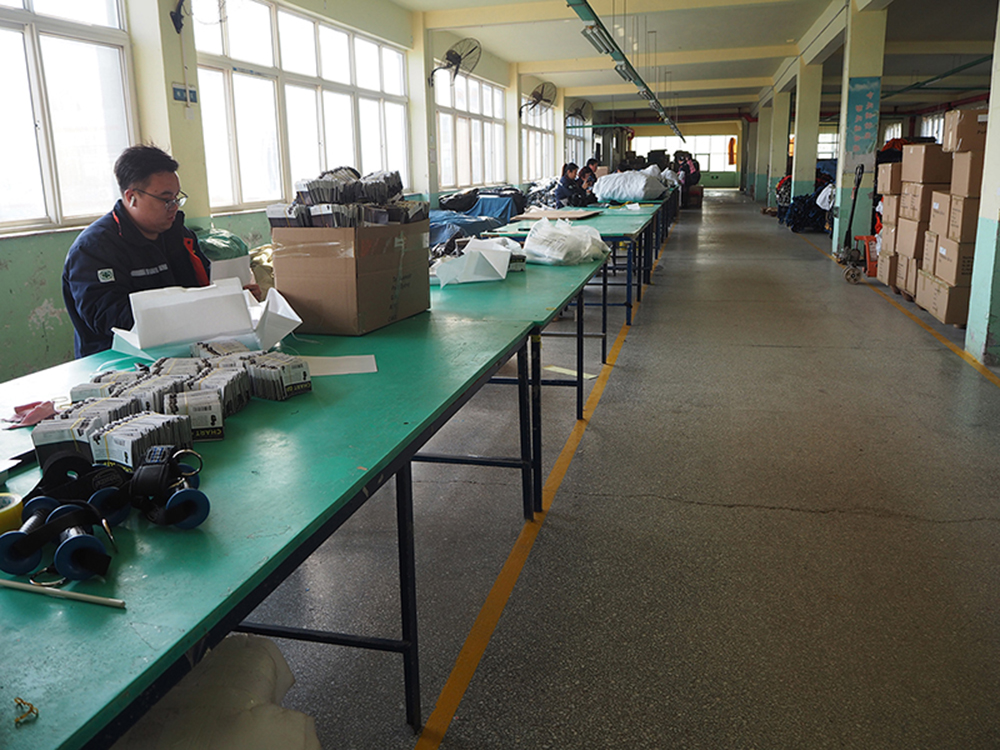
Packing workshop — export orders to Germany, USA, UK, France and Canada account for 70% of Libenli's total sales.
Conclusion: Compliance Is Verifiable, Not Assumed
Latex resistance band compliance is not one certificate but three layers working together: a certified quality management system, third-party material testing, and destination-market requirements. Libenli's ISO 9000:2000 Quality Certification (2005), ISO 9001:2008 Quality Management System Certification (2010), SGS certification on most items, and its 2 invention patents plus 18 utility model patents form the evidence base behind its exports to Germany, the USA, the UK, France and Canada — markets that together represent the majority of a business where export accounts for 70% of total sales.
For buyers, the value of that evidence depends entirely on verification. Confirm that the certificate holder is Haiyang Libenli Body-Building Apparatus Co., Ltd., confirm that the SGS report matches the item and material you are ordering, confirm whether EN 20957 or HS Code 9506.91 applies to your shipment, and then confirm all of it with a sample in hand. Compliance that can be checked is worth more than compliance that is simply claimed.
Have Questions or Need More Details?
Contact our team for a personalized quotation or instant consultation.
Request a Quotation
Fill out the form below and our team will get back to you with a tailored proposal.
WhatsApp Direct Chat
Prefer to chat in real-time? Message us on WhatsApp for instant assistance & quick answers.
- Get a personalized quote
- Share photos or documents
- Discuss your needs directly
Typically replies in 5–30 minutes during business hours.