
Mini Loop Band vs Pull Up Band: Which Resistance Band Fits Your Workout?
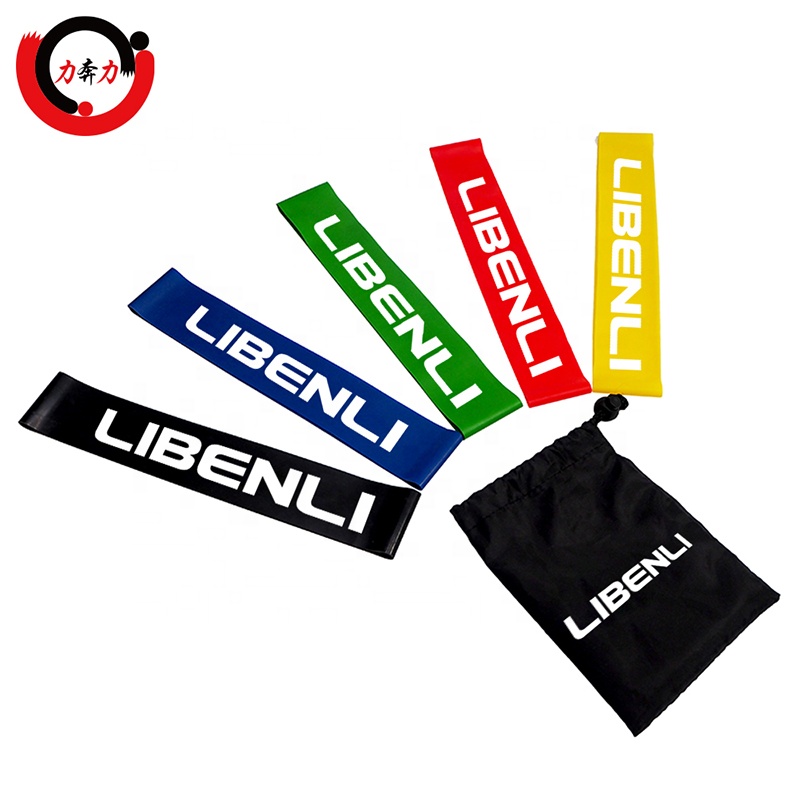
Choosing between a resistance band and a pull up band is not just a price decision. It is a size, load, and exercise-pattern decision. This guide compares the Libenli ZLQ-1 mini loop band and the Libenli ZLQ-03 power loop band, also called a pull up band, using verified product specifications and project-related application information. The goal is to help you decide which band type fits your workout, your retail assortment, or your commercial fitness project.
Quick answer: The ZLQ-1 mini loop band is a short band with a lower resistance range. It is most relevant for hip, glute, leg, hamstring, yoga and mobility-style movements. The ZLQ-03 pull up band is a much longer, higher-resistance loop. It is most relevant for assisted pull-ups, bodyweight-assisted strength work, and long-range pulling exercises. If you need a band to wear around your thighs for lateral work, choose a mini loop. If you need a band heavy enough to help you complete pull-ups or add load to a pulling exercise, choose a pull up band.
Why the difference between mini loop bands and pull up bands matters
Both products are often grouped under the same online category, such as 'resistance loop bands' or 'latex resistance bands'. But their physical dimensions determine which exercise patterns are safe and useful.
The Libenli ZLQ-1 mini loop band has a circumference of 600 mm. That short loop is easy to position around ankles, calves, thighs, or hips. The Libenli ZLQ-03 power loop band has a length of 2,080 mm. That long loop can be wrapped around a pull-up bar, a rack post, or a sturdy anchor, creating enough material for a full pulling motion.
For an individual, using the wrong format can turn a simple exercise into an awkward struggle. For a gym buyer or retail brand, the wrong format can lead to complaints, returns, and unusable product sets. That is why comparison should start with format and resistance, not with a generic 'resistance band' label.
Industry context: resistance bands now serve different types of buyers
Demand for resistance bands remains broad. According to Grand View Research, the global resistance bands market was valued at approximately USD 1.7 billion in 2024 and is projected to reach USD 2.9 billion by 2030, with a 9.9% CAGR from 2025 to 2030. North America accounted for 40.0% of the market in 2024. The same report notes that the health and sports clubs segment held a 70.6% revenue share in 2024, although individual use is the fastest-growing segment.
This market pattern explains why a manufacturer such as Haiyang Libenli Body-Building Apparatus Co., Ltd. supplies both mini loop bands and power loop bands. Home users, gym operators, rehabilitation centers, and retail brands do not all need the same band. A gym may need small low-resistance loops for a warm-up class and heavy long loops for a strength station. A retail set may need both sizes to cover a wider range of buyers. Understanding the two formats is therefore an important step in product planning.
The two Libenli resistance band formats
Libenli ZLQ-1 Mini Loop Band
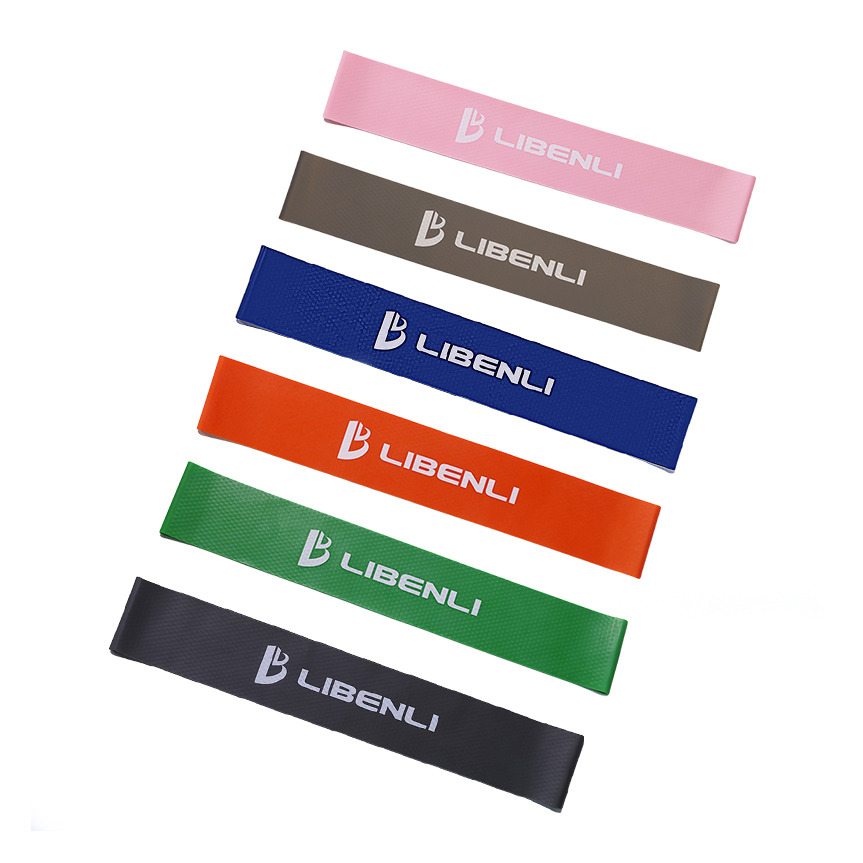
The Libenli ZLQ-1 is a mini loop band. It is also offered in a 'mini loop band with anti-slip' version. Its board specification is as follows:
- Resistance range: 5 LB to 40 LB
- Thickness: 0.3 mm to 1.2 mm
- Width: 50 mm
- Circumference: 600 mm
- Material: Latex / TPE
- Fatigue resistance: ≥30,000 stretches
In Libenli's application notes, the ZLQ-1 is relevant to gym fitness, yoga and Pilates, physical rehabilitation, sports training, and home workout. Its functional roles include muscle stretching, strength training, joint rehabilitation, body shaping, and yoga auxiliary exercise. These are typically performed indoors in a normal indoor environment with a room temperature range of -10°C to 50°C and dry, low-dust conditions. Supporting equipment can include a yoga mat, fitness handles, ankle straps, and a workout storage bag.
Libenli ZLQ-03 Power Loop Band / Pull Up Band
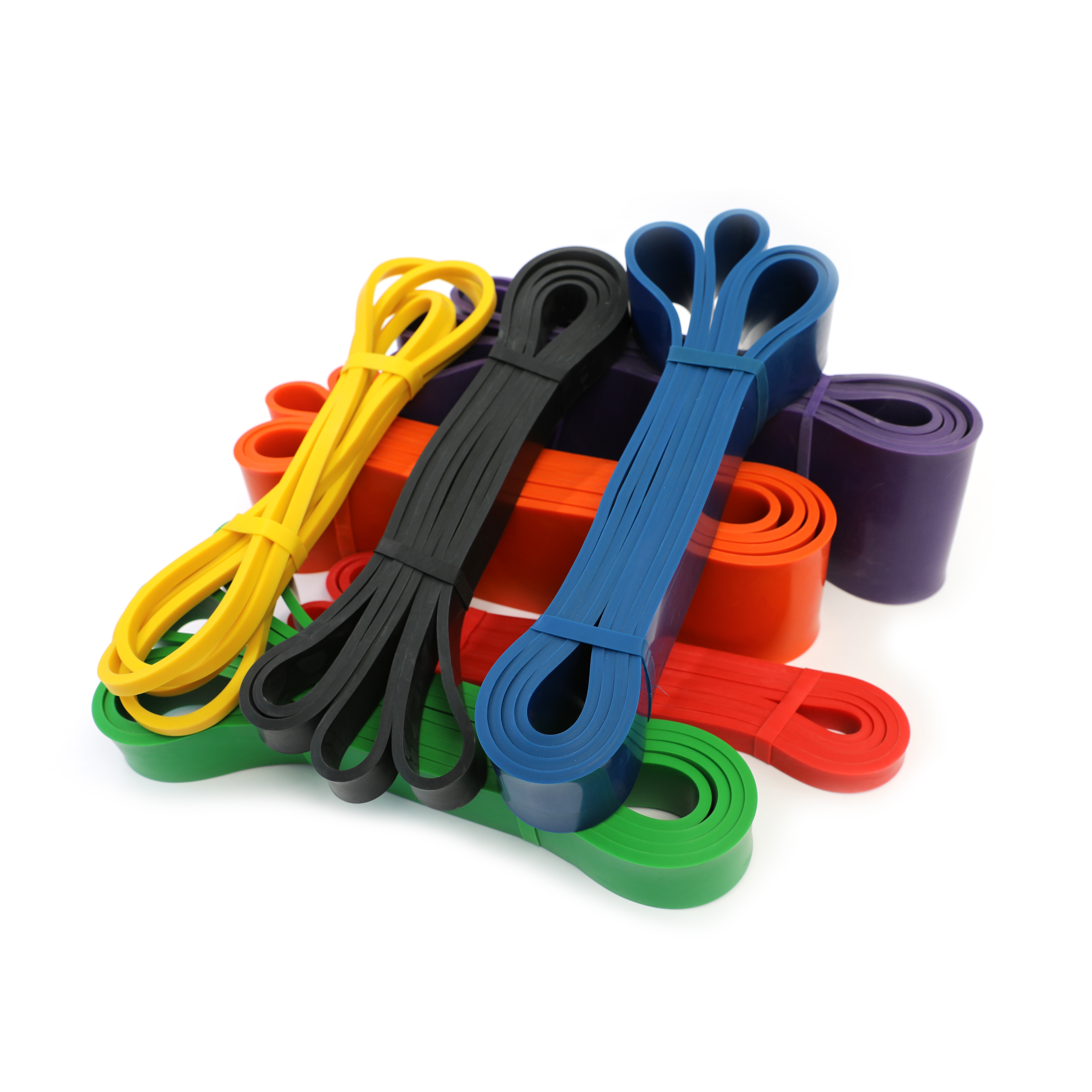
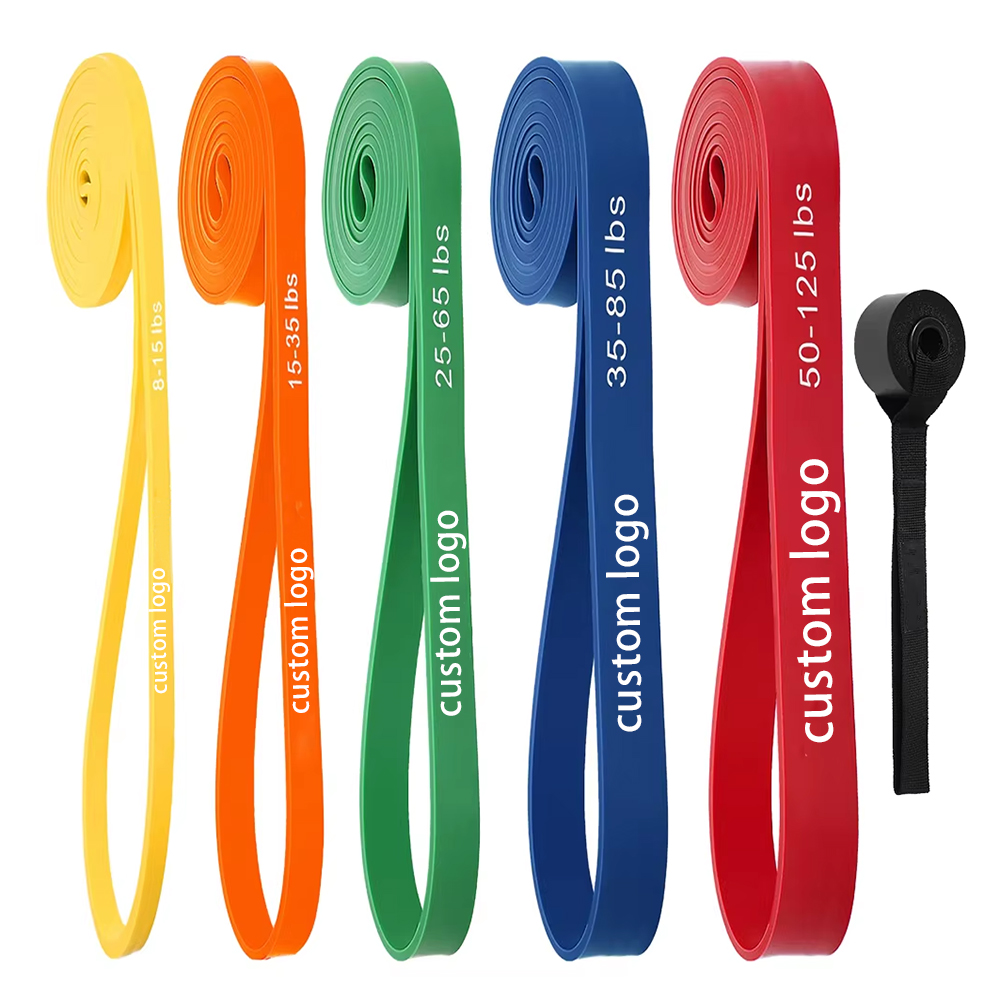
The Libenli ZLQ-03 is a power loop band. Its product type is listed as power loop band or double layer power loop band. In retail and commercial use, this format is often called a pull up band because it is used to assist pull-ups and other heavy pulling exercises. Its board specification is as follows:
- Resistance level: 8 LB to 230 LB
- Thickness: 0.45 mm
- Width: 6.4 mm to 82.5 mm
- Length: 2,080 mm
- Material: Latex
- Service life: ≥20,000 stretches
The ZLQ-03 is listed for fitness gyms, home workouts, sports rehabilitation, yoga training, physical therapy, and outdoor training equipment. The application scenario includes manual pulling and stretching with repeated tension exercise. Project types include fitness studio matching, rehabilitation clinic equipment, home sports kits, and gym retail sets. In Germany and the United States, buyers for these project types often specify 100% natural non-toxic latex, high stretch durability, skin-friendly materials, and multiple resistance color grades.
Mini loop band vs pull up band: specification comparison
| Specification | Libenli ZLQ-1 Mini Loop Band | Libenli ZLQ-03 Power Loop Band |
|---|---|---|
| Product format | Mini loop band, anti-slip option | Power loop band, double layer power loop band |
| Common use name | Mini loop / glute band | Pull up band / power band |
| Material | Latex / TPE | Latex |
| Resistance range | 5 LB to 40 LB | 8 LB to 230 LB |
| Thickness | 0.3 mm to 1.2 mm | 0.45 mm |
| Width | 50 mm | 6.4 mm to 82.5 mm |
| Loop size | Circumference 600 mm | Length 2,080 mm |
| Stretch durability | Fatigue resistance ≥30,000 stretches | Service life ≥20,000 stretches |
| Typical movements | Glute bridges, lateral walks, leg raises, ankle work, yoga, mobility | Assisted pull-ups, long-range pulling, rack work, strength conditioning |
| Applicable industries | Home fitness, yoga & Pilates, hip & glute training, sports rehab, physical therapy, gym training | Fitness gyms, home workout, sports rehab, yoga training, physical therapy, outdoor training |
The main difference is load and loop length. The ZLQ-1 mini loop band offers short-range movement with lighter loads. The ZLQ-03 pull up band offers long-range movement with much heavier loads. A product buyer who sources only one format may miss an important segment of end users.
How to choose: a step-by-step selection guide
- Start with the movement pattern. A mini loop works well when the exercise path is short, such as side stepping, clamshells, glute bridges, hip abduction, or ankle resistance work. A pull up band works well when you need a long band to wrap around a bar, post, or heavy object and pull through a large range of motion.
- Check required resistance load. The ZLQ-1 covers 5 LB to 40 LB. The ZLQ-03 covers 8 LB to 230 LB. If exercise progression relies on stacking heavy resistance, the power loop band is more appropriate. If the goal is toning, warm-up, joint work, or light strengthening, the mini loop range is more suitable.
- Measure the anchor point. A 600 mm circumference band is too small for a wide pull-up bar station. A 2,080 mm long band is easier to wrap around a bar and offers more adjustability. For leg work, the shorter mini loop is more practical.
- Decide material preference. Both bands are produced as latex products; the ZLQ-1 is also available in TPE material. For skin-contact exercises around legs or arms, the material and width influence comfort. For high-load pulling, latex power loops are a common format in gym and rehab applications.
- Plan for project type. If you are building a home fitness kit, a mini loop set is easier to package for yoga and lower-body work. If you are equipping a gym station, a pull up power loop set is more relevant for strength training. If you are retailing to both home and commercial buyers, a mixed set may be the most complete answer.
- Verify durability and quality control. For bulk orders, confirm the stated stretch durability and manufacturer testing. Libenli lists ≥30,000 stretch fatigue for ZLQ-1 and ≥20,000 stretches service life for ZLQ-03, and its quality control process includes a stretch durability test before shipment.
Use cases and application scenarios
Home fitness, yoga and Pilates: ZLQ-1 mini loop band
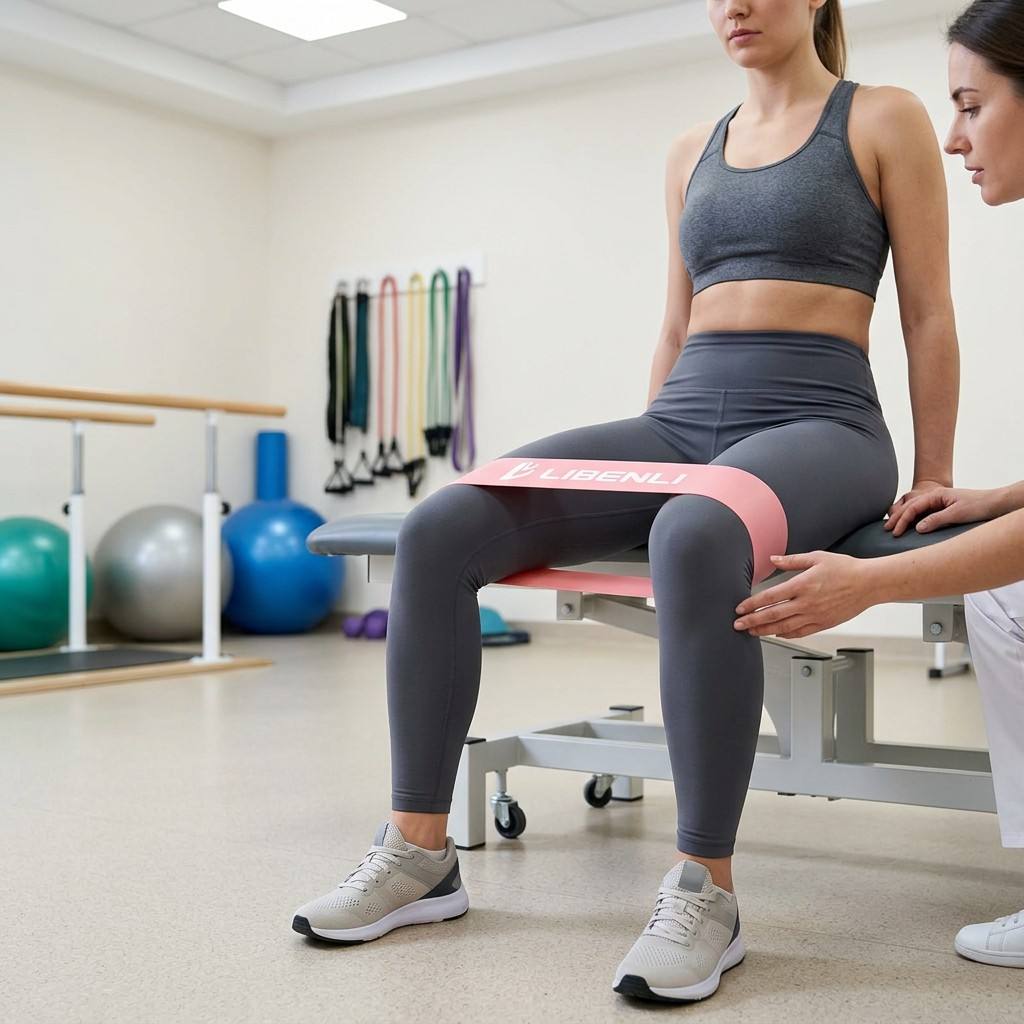
For home users, a mini loop band is often used with a yoga mat, ankle straps, or light fitness handles. The ZLQ-1 is listed for gym fitness, yoga and Pilates, sports training, and home workout. Its functions include muscle stretching, strength training, joint rehabilitation, body shaping, and yoga auxiliary exercise. These use cases are common in Australia according to Libenli's application notes, and they fit indoor conditions of -10°C to 50°C in a dry, low-dust room.
Gym strength and assisted pull-ups: ZLQ-03 pull up band
For gym facilities, the ZLQ-03 is the format that can be attached to pull-up bars and used for assisted bodyweight training. Its resistance range reaches 230 LB, which gives stronger users and commercial gyms enough load variation. Libenli application notes place this product in fitness studio matching, rehabilitation clinic equipment, home sports kits, and gym retail sets. The operating mode is manual pulling and stretching with repeated tension exercise. In Germany and the United States, these types of projects typically require high-stretch latex bands with color-coded resistance levels.
Rehabilitation and physical therapy: both bands
Both the ZLQ-1 and the ZLQ-03 are listed for sports rehabilitation and physical therapy. The mini loop band is suitable for low-load joint rehabilitation, range-of-motion work, and progressive glute or shoulder activation. The long power loop band can be used for controlled pulling patterns and assisted strength work where the user needs a higher load or a long anchor point. For a rehabilitation clinic, the product mix depends on the patient's movement capacity and the required load.
Commercial project evidence from Libenli
Libenli supplies both models to commercial fitness and retail clients. One Australia-based case involving product ZLQ-1 reported a defect or complaint rate below 0.05% and a reduction in the R&D-to-market cycle by 20%, with annual supply exceeding 150,000 units across more than 12 specialized product lines.
For the ZLQ-03 power loop band, an international premium fitness brand has used Libenli as a supplier for global B2C retail, premium commercial gym fit-outs, and specialized physical therapy or rehabilitation centers. The project features included precision resistance calibration with a tension error margin within ±2%, medical-grade eco-friendly materials, and an anti-rolling surface treatment. These points are useful for buyers who want measured performance and defect control, not just descriptive product claims.
For procurement teams, the important lesson is to match the band format to the exercise station. Glute and mobility racks need mini loops. Pull-up and strength racks need long power loops. A project that includes both can cover more users with clearer color-coded resistance levels.
Frequently asked questions
Which band fits gym use: the ZLQ-1 mini loop band or the ZLQ-03 pull up band?
Both are listed for gym training applications. The ZLQ-1 mini loop band has a 5 LB to 40 LB resistance range and a 600 mm circumference, so it fits warm-up, glute, leg, mobility, and rehabilitation work. The ZLQ-03 power loop band is 2,080 mm long and reaches 230 LB, so it can support assisted pull-ups and long-range strength pulling. A gym may need both if it covers different training zones.
How does size affect a resistance loop band for exercises?
The ZLQ-1 mini loop band has a width of 50 mm and a circumference of 600 mm, making it easy to place around thighs or ankles for short lateral and glute movements. The ZLQ-03 pull up band has a width range of 6.4 mm to 82.5 mm and a length of 2,080 mm. That extra length provides the material needed to wrap around a pull-up bar or anchor and perform a full pulling path.
Can Libenli customize mini loop bands and pull up bands for OEM orders?
Yes. Libenli operates in OEM and ODM production modes. Customization options include resistance strength, band thickness and width, length, surface color, logo silk printing, package design, and accessory matching. The MOQ is 100 pieces for in-stock items and 500 pieces for customized logo items. Lead time is 20 to 35 days.
How do buyers check durability before ordering in bulk?
Libenli performs a stretch durability test before shipment. Product specifications list ≥30,000 stretches for the ZLQ-1 and ≥20,000 stretches service life for the ZLQ-03. In a project case related to ZLQ-1, the reported defect or complaint rate was below 0.05%. For current specifications, packaging, or project-based selection, you can download the Libenli catalog or contact the company through its website.
Conclusion
The mini loop band and the pull up band are not competing versions of the same product. The Libenli ZLQ-1 mini loop band is designed for short, lighter, or joint-friendly movements around the lower body and hips. The Libenli ZLQ-03 power loop band is designed for long, heavy pulling exercises, including assisted pull-ups and gym strength work.
When choosing a resistance band, let the exercise pattern decide the format. When choosing a supplier, verify dimensions, resistance range, material, stretch durability, and project history. Libenli supplies both formats, with OEM customization, documented stretch testing, and commercial project cases that can help buyers define the right product mix.
Need a project-based resistance band selection or an OEM sample plan?
Have Questions or Need More Details?
Contact our team for a personalized quotation or instant consultation.
Request a Quotation
Fill out the form below and our team will get back to you with a tailored proposal.
WhatsApp Direct Chat
Prefer to chat in real-time? Message us on WhatsApp for instant assistance & quick answers.
- Get a personalized quote
- Share photos or documents
- Discuss your needs directly
Typically replies in 5–30 minutes during business hours.