
ZLQ-1 Mini Loop Band vs ZLQ-03 Pull Up Band: Which Resistance Band Fits Your Program?
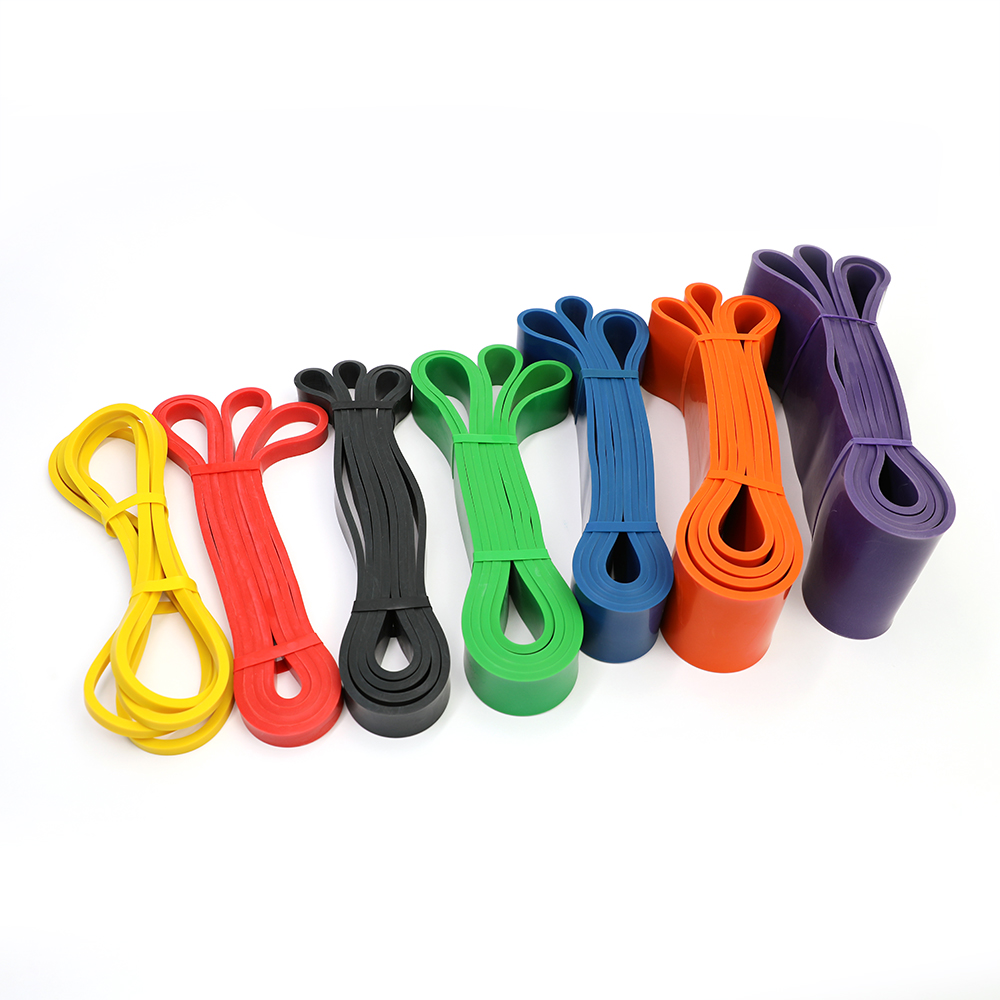
Two closed-loop formats sit at the centre of most resistance band programme decisions: the ZLQ-1 mini loop band and the ZLQ-03 power loop band, which is also supplied and specified as a pull up band. Both are dipped from natural latex and calibrated to the same tension tolerance, so the choice between them is not a question of which band is better made. It is a question of which loop geometry matches the movement your programme is built around.
The short answer: ZLQ-1 is the correct choice for short-lever, low-to-moderate resistance work — yoga and Pilates, hip and glute training, sports rehabilitation, physical therapy and home fitness — with 5LB–40LB of resistance inside a 600mm circumference. ZLQ-03 is the correct choice when the programme needs length, leverage and a much higher ceiling — fitness gym, home workout, yoga training, physical therapy and outdoor training equipment — with 8LB–230LB of resistance across a 2080mm length.
What follows is the specification logic behind that split, a repeatable selection sequence, the use cases each band was designed for, and the quality signals a buyer should verify on both formats regardless of which one is ordered. Both products are manufactured by Haiyang Libenli Body-Building Apparatus Co., Ltd., a latex tubing and resistance band manufacturer founded in 1997 in Qingdao, China.
Why Loop Format, Not Material, Causes Most Resistance Band Mismatches
Resistance band returns and programme complaints are frequently attributed to material quality, but the recurring root cause is format. A 600mm mini loop and a 2080mm power loop are not interchangeable at the same resistance level, because the two formats place the band under tension across very different ranges of motion. Three failure patterns repeat in buyer feedback and programme rework:
- A mini loop specified for pull-up assistance. The 600mm circumference cannot span the anchor-to-hand distance, so the loop is doubled or knotted. That changes the effective tension and creates a stress point that does not exist in the tested configuration.
- A 2080mm power loop specified for glute bridges and lateral band walks. The excess length forces the user to shorten the band by hand, so resistance is no longer governed by the band's calibrated cross-section.
- A single resistance level specified for an entire programme. The two formats do not share a common ceiling — 5LB–40LB against 8LB–230LB — so a programme that combines hip activation with pull-up assistance needs two bands, not one band used two ways.
Format mismatch carries a different cost profile from material failure. It surfaces as returns, as programme substitutions and as corrected reorders — all of which are more expensive than resolving the specification at the sampling stage.
Where the Resistance Band Market Stands in 2026
Resistance bands are now a mainstream fitness and therapy category rather than a niche accessory. Grand View Research valued the global resistance bands market at approximately USD 1.7 billion in 2024 and projects it to reach USD 2.9 billion by 2030, a CAGR of 9.9% from 2025 to 2030. North America held the largest regional revenue share in 2024 at 40.0%.
The demand structure matters more than the headline number for anyone choosing between loop formats. The health and sports clubs segment accounted for a 70.6% revenue share in 2024, while individual use is the fastest-growing segment. That means the same supply chain is now asked to serve institutional replenishment and fast-moving individual retail at the same time. Market Research Future estimates that therapy and exercise bands represent roughly 50% of the total resistance band market as of 2024/2025, which aligns with the rehabilitation and physical therapy positioning of both ZLQ-1 and ZLQ-03.
Two regulatory anchors apply to cross-border buyers. Fitness equipment such as resistance bands entering the European Union is expected to comply with the EN 20957 series (stationary training equipment) for CE marking, and resistance bands are commonly classified under HS Code 9506.91 for articles of general physical exercise, gymnastics or athletics. Neither reference dictates which loop format a programme needs, but both shape how a specification is documented at import.
The Two Formats, Specified: ZLQ-1 and ZLQ-03
ZLQ-1 Mini Loop Band
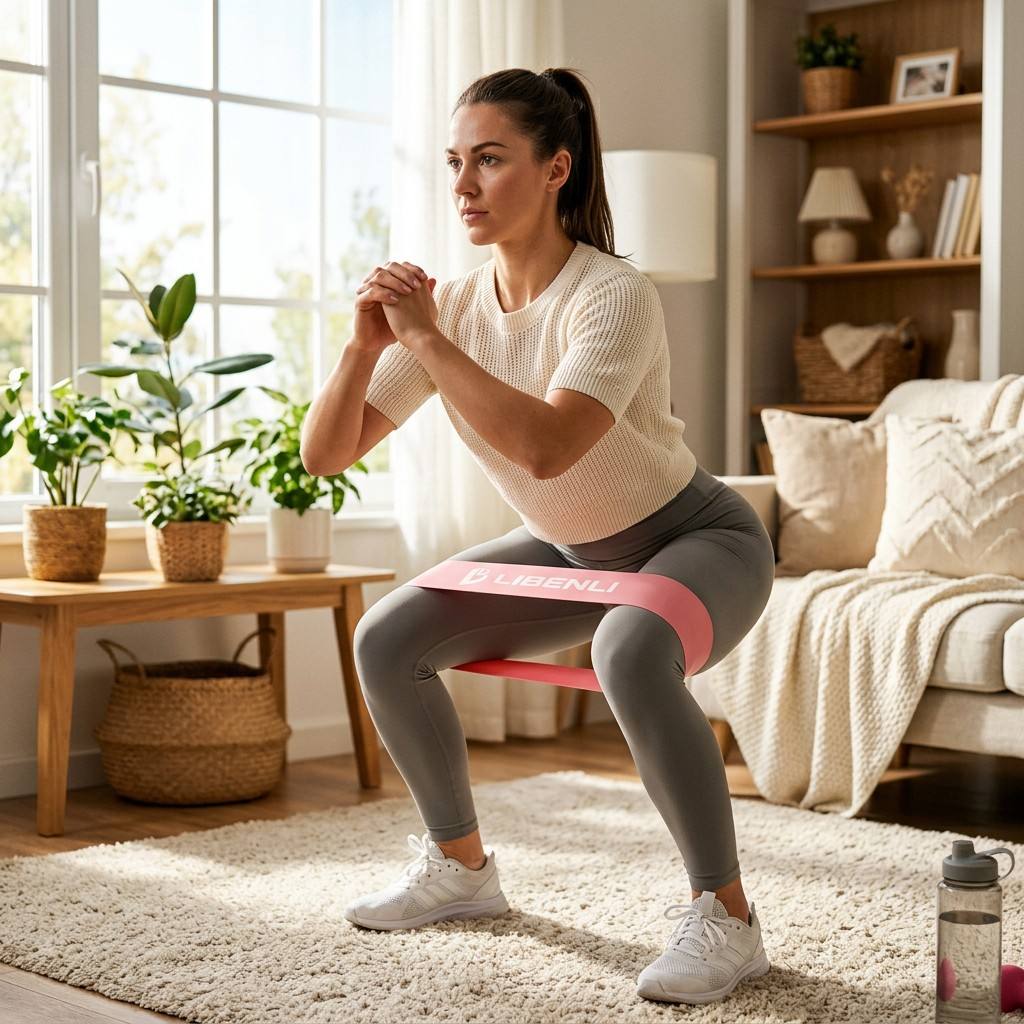
ZLQ-1 is a closed mini loop built for short-lever work. It is manufactured in thicknesses from 0.3mm to 1.2mm, with a 50mm width and a 600mm circumference, and it covers a resistance range of 5LB to 40LB. The outer surface carries an anti-slip design, which keeps the loop in position when it is placed around the thighs, ankles or wrists during lateral and rotational movement.
Its intended applications are yoga and Pilates, hip and glute training, sports rehabilitation, physical therapy and home fitness. In those settings the working range of motion is short — a few centimetres of hip abduction, a controlled knee extension, a slow resisted rotation — and the 600mm circumference matches that travel without introducing slack.
ZLQ-03 Power Loop Band / Pull Up Band
ZLQ-03 is a long power loop, also specified as a pull up band. It is produced at 0.45mm thickness, with widths from 6.4mm to 82.5mm and a 2080mm length, and it spans a resistance range of 8LB to 230LB. The surface carries an anti-rolling treatment, so the band stays flat when it is anchored, stepped on, or stretched overhead.
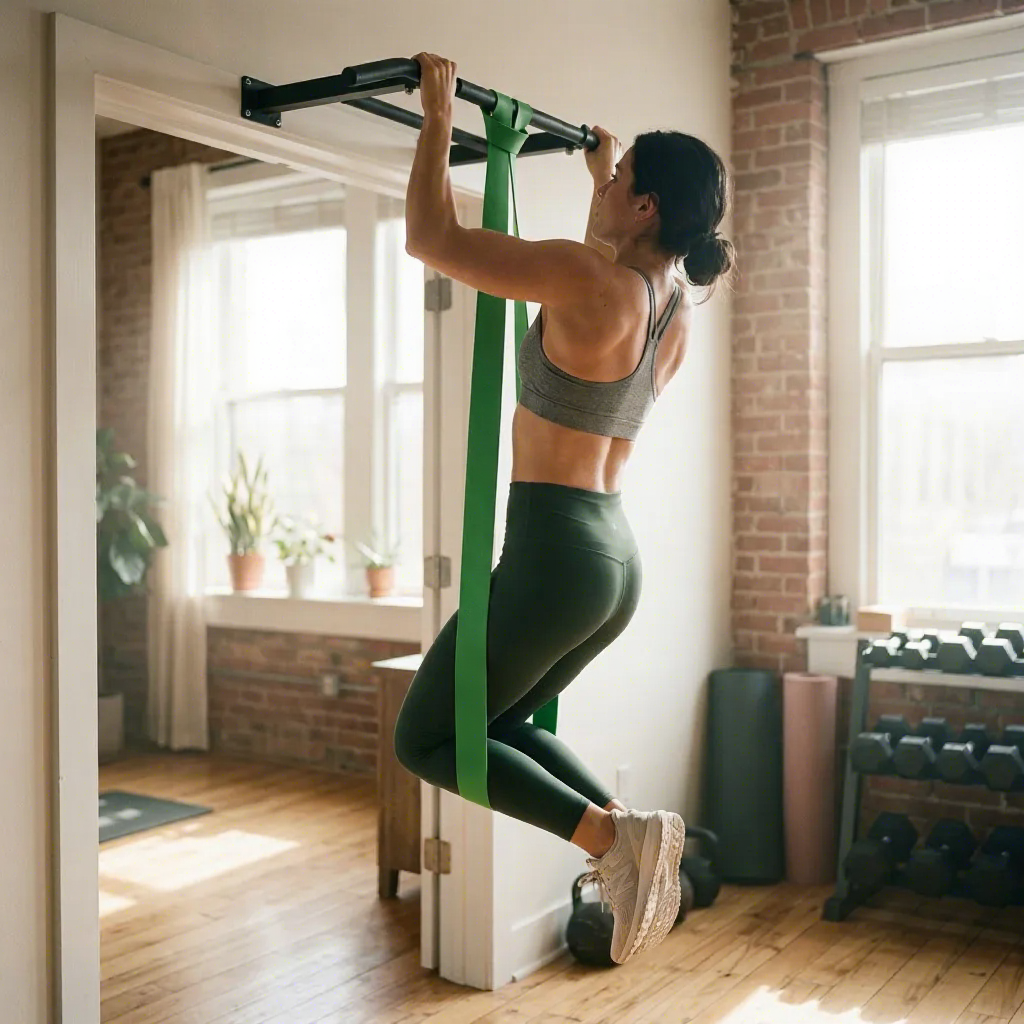
Its intended applications are fitness gym, home workout, yoga training, physical therapy and outdoor training equipment. The 2080mm length is what makes pull-up assistance, anchored rows, presses and long-range stretching possible: the band reaches from an anchor point to the hands through a full range of movement.
Why the Dimensions Produce Different Resistance
Three geometric variables decide what a loop can do. Circumference sets how much band is available before the working elongation is reached — 600mm keeps the loop short and the force immediate, while 2080mm allows a longer lever and a more progressive build-up. Width and thickness set the cross-sectional area, which is what converts elongation into force, and that is why ZLQ-03 spans up to 230LB while ZLQ-1 tops out at 40LB. Surface treatment decides whether the band stays where it was placed: anti-slip for ZLQ-1 against skin and fabric, anti-rolling for ZLQ-03 against floors and anchors.
Material behaviour, by contrast, is shared. Both formats are built from natural latex capable of up to 600% elongation, compared with roughly 300% for traditional TPE bands, and both are calibrated within a ±2% tension error margin against an industry average of about ±15%. An anti-oxidation coating limits powdering during frequent handling, and tensile performance is significantly higher than low-grade synthetic latex constructions.
How to Choose Between ZLQ-1 and ZLQ-03: A Six-Step Decision Sequence
- Identify the dominant movement pattern. Short-lever patterns — hip abduction, glute bridge, lateral band walk, ankle work, shoulder rotation — belong to ZLQ-1. Long-lever patterns — pull-up assistance, anchored rows and presses, overhead stretching, band-resisted squats anchored low — belong to ZLQ-03.
- Set the resistance ceiling before the resistance level. ZLQ-1 caps at 40LB and ZLQ-03 reaches 230LB. If the programme's top end exceeds 40LB at the working range of motion, ZLQ-1 cannot serve it, however many bands are layered together.
- Check the anchor and attachment. ZLQ-1 is anchored by the body, using the thighs, ankles, wrists or hands. ZLQ-03 needs an external anchor: a pull-up bar, door anchor, rack, pole or tree.
- Check the surface and environment. Studio floors, rehab tables and indoor gyms favour ZLQ-1's anti-slip surface. Outdoor training areas, platforms and equipment racks favour ZLQ-03's anti-rolling treatment.
- Decide the set composition. Club programmes and retail assortments usually justify both formats; a single-purpose home-fitness or rehabilitation kit can be built on one.
- Confirm the specification is repeatable. The format decision only holds if the next production run reproduces the same tension curve — a supplier question addressed further below.
Use Cases: Which Band Belongs in Which Programme
Where ZLQ-1 Fits
- Yoga and Pilates: light, controlled resistance around the legs and arms where the anti-slip surface keeps the loop from rotating mid-pose.
- Hip and glute training: the 600mm circumference is sized for placement above the knees or around the ankles, matching lateral walks, clamshells and hip abduction.
- Sports rehabilitation: low-to-moderate levels from 5LB upward allow gradual progression within a short range of motion.
- Physical therapy: the mini loop format is commonly used for controlled joint and soft-tissue work where a long band would be impractical.
- Home fitness: a compact, low-storage format that needs no anchor point and no dedicated space.
Where ZLQ-03 Fits
- Fitness gym: the 2080mm length and up to 230LB range support assisted pull-ups, anchored rows, presses and loaded mobility work in a shared training floor environment.
- Home workout: one long loop covers assistance and resistance work that would otherwise require multiple short loops.
- Yoga training: long-loop stretching and stabilisation where the band must reach across the full body.
- Physical therapy: progressive loading with a wider resistance spread than a mini loop can offer.
- Outdoor training equipment: the anti-rolling treatment keeps the band flat on platforms, racks, poles and outdoor anchors.
ZLQ-1 vs ZLQ-03: Specification Comparison
| Decision Criterion | ZLQ-1 Mini Loop Band | ZLQ-03 Power Loop / Pull Up Band |
|---|---|---|
| Loop format | Closed mini loop | Long power loop / pull up band |
| Circumference / length | 600mm circumference | 2080mm length |
| Width | 50mm | 6.4mm – 82.5mm |
| Thickness | 0.3mm – 1.2mm | 0.45mm |
| Resistance range | 5LB – 40LB | 8LB – 230LB |
| Surface treatment | Anti-slip design | Anti-rolling surface treatment |
| Intended use cases | Yoga & Pilates, hip & glute training, sports rehabilitation, physical therapy, home fitness | Fitness gym, home workout, yoga training, physical therapy, outdoor training equipment |
| Material | Natural latex | Natural latex |
| Tension accuracy | ±2% tension error | ±2% tension error |
| Elongation | Up to 600% | Up to 600% |
| Durability standard | 30,000+ stretch cycles | 30,000+ stretch cycles |
| Typical programme role | Activation, mobility, rehabilitation progression | Strength assistance, anchored resistance, long-range work |
Read across the table, the two products converge only on material, tension accuracy, elongation and durability. They separate on every dimension that determines whether a movement can be performed at all: loop format, length, width, thickness, resistance range, surface treatment and intended use.
Quality Signals That Apply to Both Formats
Once the format decision is settled, the same verification list applies to ZLQ-1 and ZLQ-03 alike. Buyers evaluating a resistance band supplier should be able to confirm each of the following:
- Natural latex construction with high elongation. Libenli latex bands are specified for up to 600% elongation, against roughly 300% for traditional TPE bands, with higher tensile strength and greater material purity than low-grade synthetic latex.
- Precision resistance calibration. A ±2% tension error margin, compared with an industry average of about ±15%, which produces predictable tension through the full range of motion and consistent linear resistance efficiency.
- Anti-rolling and anti-slip surface treatment. Applied according to format — anti-slip on ZLQ-1, anti-rolling on ZLQ-03 — supported by an anti-oxidation coating that results in zero powdering during high-frequency handling.
- A 30,000+ stretch-cycle durability standard applied to both formats, which matters directly to clubs, rehabilitation centres and rental-style programmes where bands are used daily.
- Incoming and outgoing testing. Quality assurance procedures include 100% raw material inspection before production and complete stretch, tension and fatigue tests for all finished goods.
- Certification and documentation. ISO 9000:2000 Quality Certification (2005) and ISO 9001:2008 Quality Management System Certification (2010), with most products certified by SGS to meet international environmental and safety requirements, plus a 3A Credit Rating Certificate issued by the Ministry of Commerce of China and CCPIT.
- Engineering depth behind the specification. Libenli holds 2 invention patents and 18 utility model patents, supported by an R&D team of 20 engineers.
- An allergy-aware option. Latex allergy risk is a documented constraint for a share of end users; latex-free TPE alternative bands are available for allergic groups.
Buying for the Long Term: What a Multi-Year Supply Relationship Requires
Choosing between ZLQ-1 and ZLQ-03 is a programme decision. Keeping that decision valid across years of reorders is a supply decision — and it depends on whether the manufacturer can reproduce the same tension curve and the same dimensions in every subsequent batch.
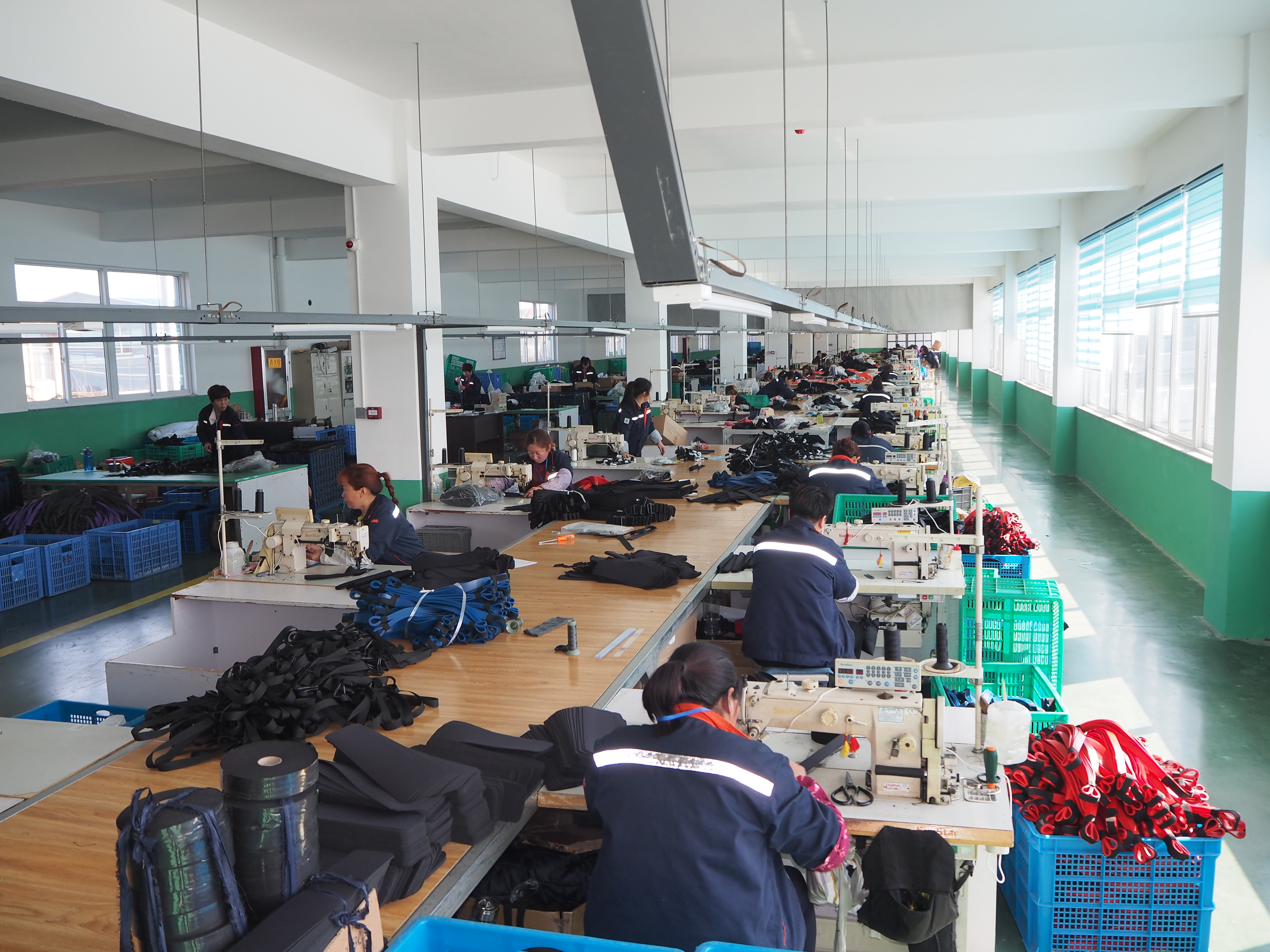
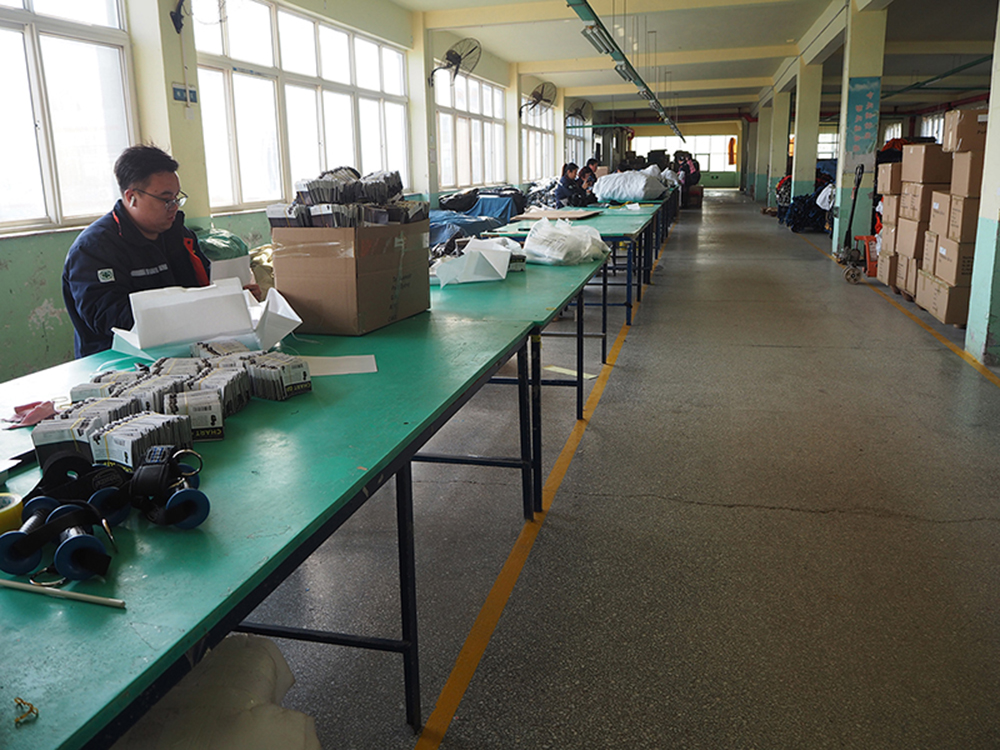
Haiyang Libenli Body-Building Apparatus Co., Ltd. operates a 50,000 m² plant with more than 300 employees. Capacity is split across 24 dedicated production lines for dipped latex tubing, delivering a daily output of 120,000 metres, and 2 exclusive production lines for latex bands with a daily capacity of 25,000 metres. Traditional and OEM resistance band programmes are supported by the same R&D team of 20 engineers, and the company's main export markets are Germany, the USA, the UK, France and Canada.
For buyers planning a multi-year programme across both formats, the commercial framework is as follows:
- MOQ: 100 pcs for stock items; 500 pcs for OEM customized orders.
- Delivery terms: FOB Qingdao, EXW Factory, or CIF major global seaports.
- Acceptance criteria: 100% full pre-shipment inspection, with pre-production and pre-shipment inspection supported by clients or third-party organizations such as SGS.
- Payment terms: 30% T/T advance deposit with 70% balance against copy of Bill of Lading; Alibaba Trade Assurance payment available for small orders.
- After-sales risk control: unconditional free return and replacement for defective products.
That combination is what allows a programme to standardise on ZLQ-1 for activation and rehabilitation work and ZLQ-03 for loaded and assisted work, without re-qualifying a new supplier each time the resistance range is extended.
Frequently Asked Questions
What compliance documentation should a long-term resistance band supply partner provide?
Libenli holds ISO 9000:2000 Quality Certification (2005) and ISO 9001:2008 Quality Management System Certification (2010), and most products are certified by SGS to meet international environmental and safety requirements. The company also holds a 3A Credit Rating Certificate issued by the Ministry of Commerce of China and CCPIT, together with 2 invention patents and 18 utility model patents. On the production side, quality assurance procedures include 100% raw material inspection before production and complete stretch, tension and fatigue tests for all finished goods, which directly addresses product cracking and breakage risk. For European Union shipments, buyers should note that fitness equipment such as resistance bands is expected to comply with the EN 20957 series for CE marking, and that resistance bands are commonly classified under HS Code 9506.91.
Can one supplier produce both ZLQ-1 mini loop bands and ZLQ-03 power loop bands?
Yes. Both formats are produced by Haiyang Libenli Body-Building Apparatus Co., Ltd., which runs 2 exclusive production lines for latex bands with a daily capacity of 25,000 metres, alongside 24 dedicated production lines for dipped latex tubing delivering 120,000 metres per day. A 20-engineer R&D team supports format and specification work, and the factory covers 50,000 m² with more than 300 employees. Producing both formats under one quality system is what allows a single tension tolerance — ±2% error — to be applied to a 600mm mini loop and a 2080mm power loop alike.
How does the choice between ZLQ-1 and ZLQ-03 affect programme cost?
Cost is driven primarily by material volume and resistance level: ZLQ-03 uses a 2080mm length where ZLQ-1 uses a 600mm circumference, and ZLQ-03 extends to 230LB against ZLQ-1's 40LB. At material level, natural latex bands carry an initial acquisition cost roughly 15–20% higher than TPE alternatives, but total cost of ownership is about 50% lower because service life is 3–5 times longer. On the commercial side, stock items start at an MOQ of 100 pcs and OEM customized orders at 500 pcs, with payment terms of 30% T/T advance deposit and 70% balance against copy of Bill of Lading.
How should buyers validate ZLQ-1 and ZLQ-03 before a production order?
Validation should confirm the two things the formats differ on: loop geometry and tension behaviour. Libenli supports pre-production and pre-shipment inspection by the client or by third-party organizations such as SGS, and acceptance inspection includes 100% full pre-shipment inspection. Because all finished goods go through stretch, tension and fatigue testing, a buyer can compare the delivered tension curve of a ZLQ-1 sample against a ZLQ-03 sample at the same nominal resistance level, and confirm that the anti-slip treatment on ZLQ-1 and the anti-rolling treatment on ZLQ-03 behave as specified on the intended surface.
What does long-term resistance band supply from China involve?
A workable long-term arrangement rests on fixed specifications, fixed acceptance criteria and fixed commercial terms. Libenli ships on FOB Qingdao, EXW Factory or CIF major global seaports, supports pre-production and pre-shipment inspection, and backs defective products with unconditional free return and replacement. The company has supplied latex tubing and resistance bands since 1997, with main markets in Germany, the USA, the UK, France and Canada. Buyers evaluating a long-term partner can review the full product and capability range in the Libenli catalogue (PDF) and request a quotation, sample set or OEM specification sheet directly.
Conclusion: Choose the Format, Then Lock the Specification
ZLQ-1 and ZLQ-03 are not competing products; they are two answers to two different movement problems. ZLQ-1 — 600mm circumference, 50mm width, 0.3mm to 1.2mm thickness, 5LB to 40LB, anti-slip — is the mini loop for yoga and Pilates, hip and glute training, sports rehabilitation, physical therapy and home fitness. ZLQ-03 — 2080mm length, 6.4mm to 82.5mm width, 0.45mm thickness, 8LB to 230LB, anti-rolling — is the power loop and pull up band for fitness gym, home workout, yoga training, physical therapy and outdoor training equipment.
What they share is the part that determines long-term programme reliability: natural latex construction, precision resistance calibration within ±2% tension error, anti-rolling and anti-slip surface treatment, and a 30,000+ stretch-cycle durability standard, all backed by 100% raw material inspection and full stretch, tension and fatigue testing on finished goods.
If you are specifying either format for a club, a rehabilitation programme, a retail assortment or an OEM line, the next step is to confirm the resistance ladder and the loop geometry against your programme, then request samples of both. Contact Libenli at www.latextubing.com or email public@libenli.cn (Tel / WhatsApp: +86 13864846995) to request a quote, a sample set, or the OEM specification sheet for ZLQ-1 and ZLQ-03.
Have Questions or Need More Details?
Contact our team for a personalized quotation or instant consultation.
Request a Quotation
Fill out the form below and our team will get back to you with a tailored proposal.
WhatsApp Direct Chat
Prefer to chat in real-time? Message us on WhatsApp for instant assistance & quick answers.
- Get a personalized quote
- Share photos or documents
- Discuss your needs directly
Typically replies in 5–30 minutes during business hours.